|

摘要:文化是一个国家、一个民族的灵魂。文化兴国运兴,文化强民族强。没有高度的文化自信,没有文化的 繁荣兴盛,就没有中华民族的伟大复兴。文化更是一个民族的脊梁和灵魂,它铸造着 国家和民族的心灵和品格,一个民族有了文化自信,才能立于世界民族之林;人民有了信仰,国家才有力量,民族才有希望。而文化自信是促成这些目标的至关重要的因素。
Abstract: Culture is the soul of a country and a nation. Culture invigorates the country, and culture strengthens the nation. Without a high degree of cultural confidence, without the prosperity of culture, there will be no great rejuvenation of the Chinese nation. Culture is the backbone and soul of a nation. It casts the heart and character of a nation and a nation. Only with cultural confidence can a nation stand in the forest of nations in the world. Only when the people has faith can a country have strength and a nation have.
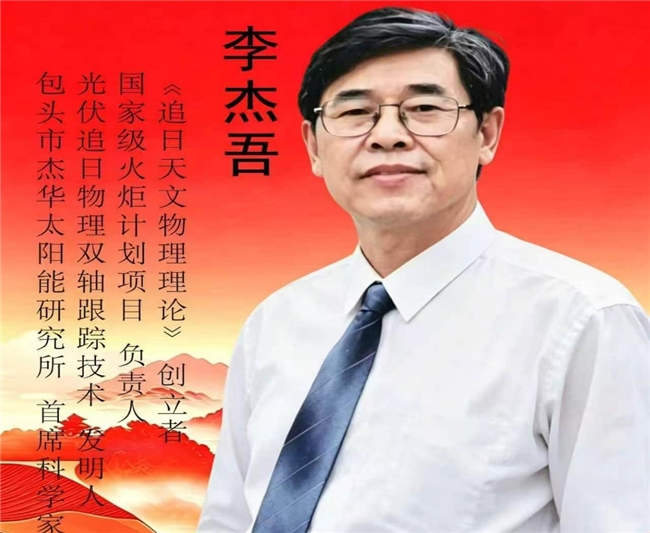
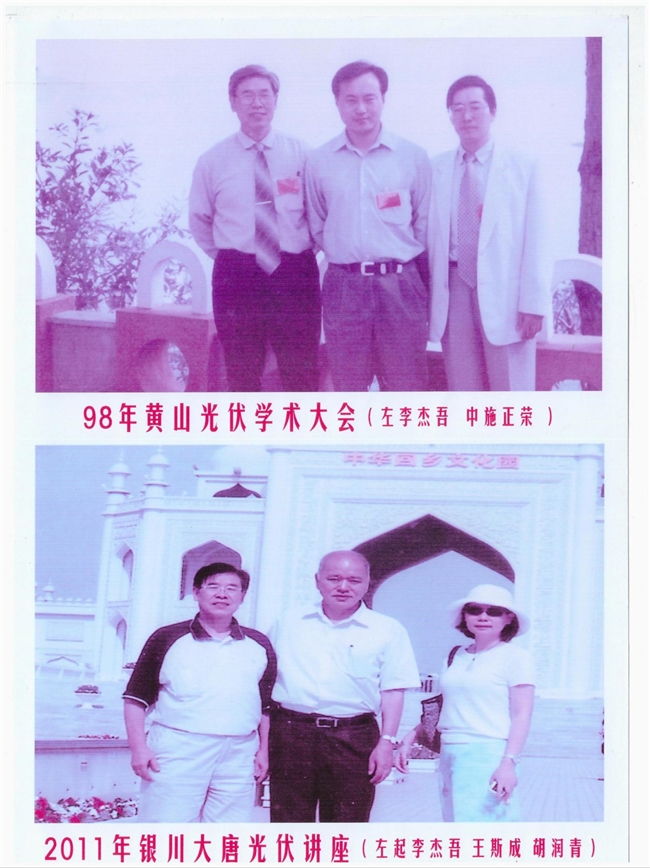
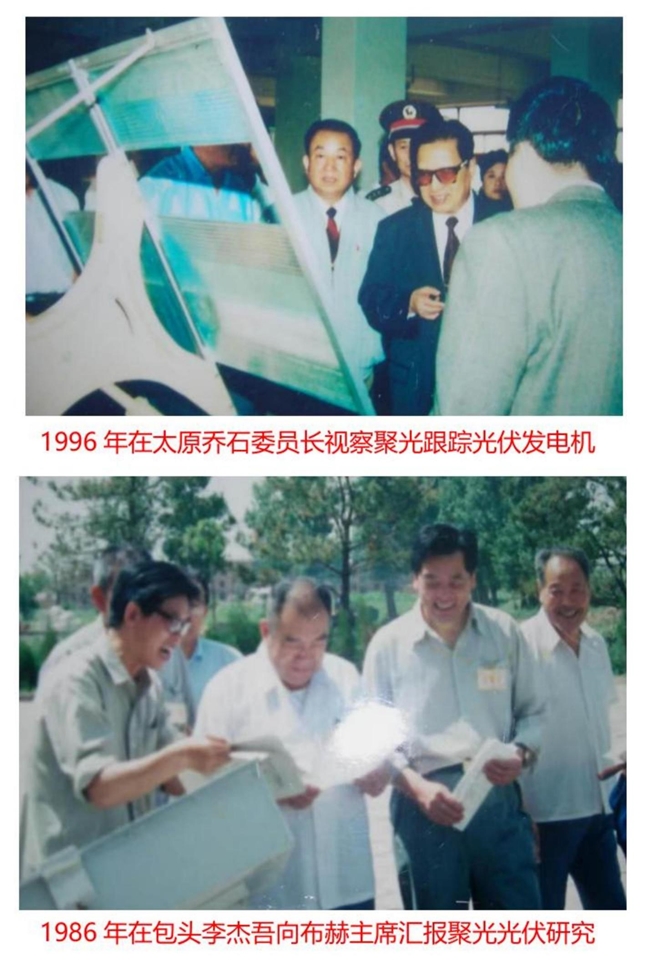
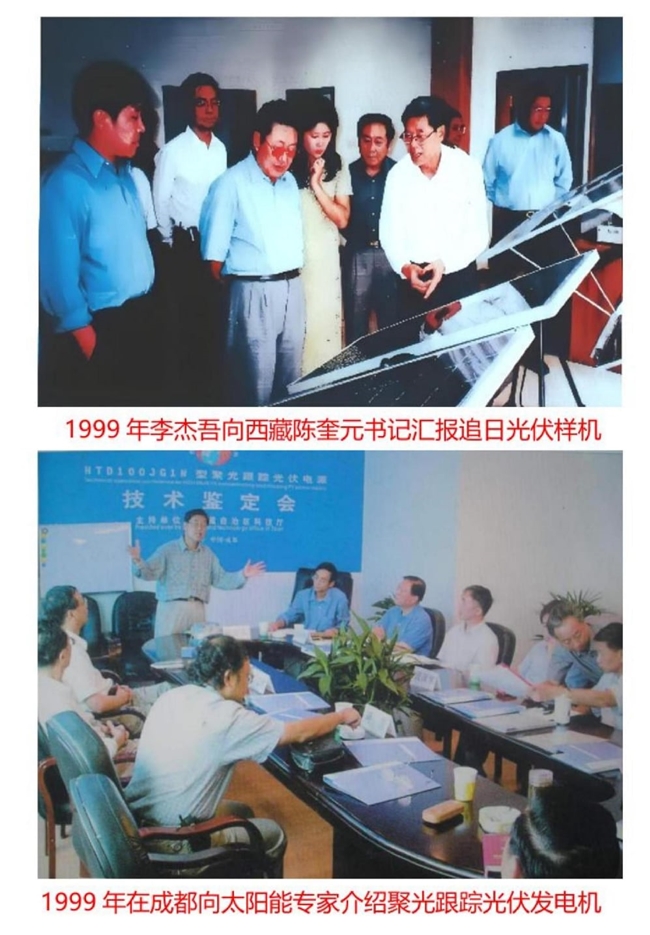
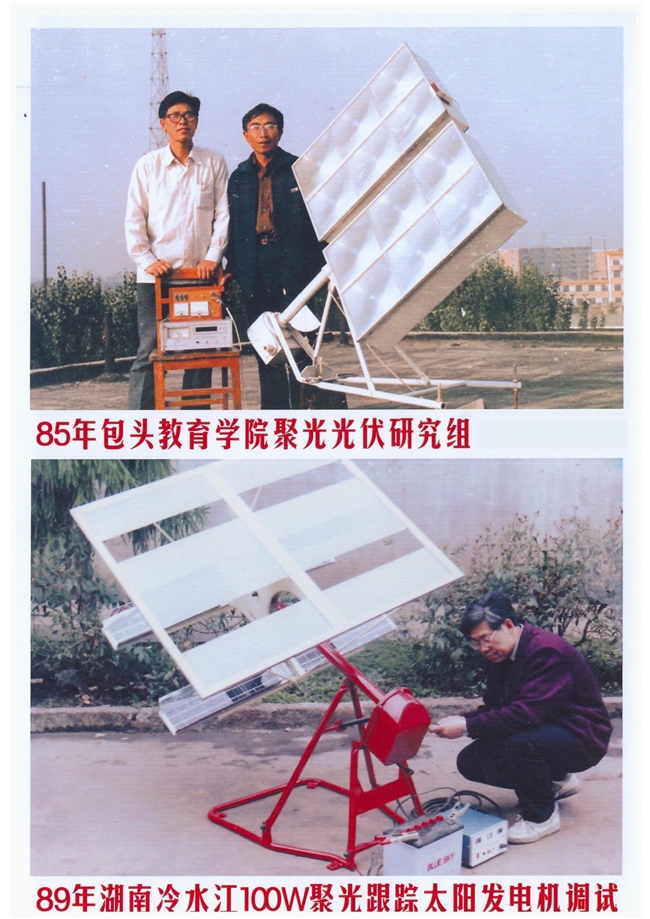
内蒙古包头市,86 岁高龄的物理教授李杰吾,这位烈士之子,用四十五年艰苦卓绝的深入钻研,独自走完了一条从基础能源理论的原创到带领团队完成核心技术的发明与工程验证的完整科研之路。他不是天才,是吸取成千上万次失败的教训与深思,才另辟奚径得来的原创性成功。
原创理论:一元方程优于人工智能的庞大数据库
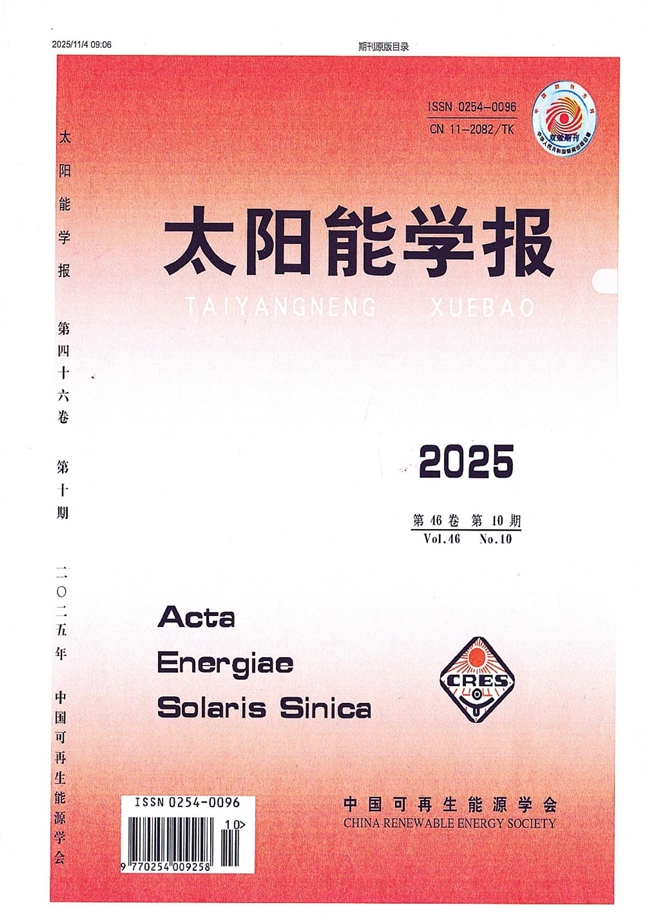
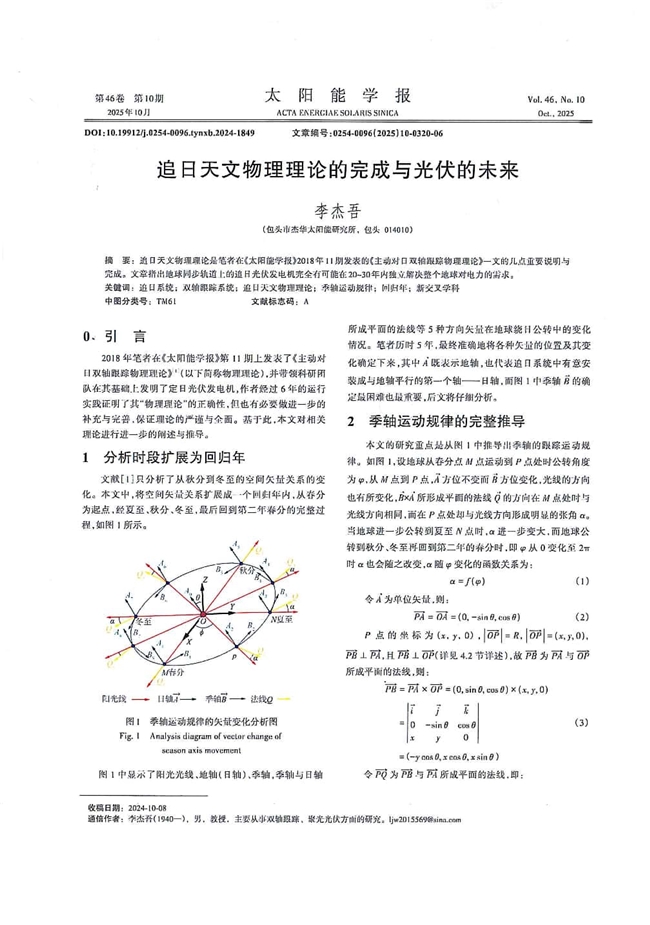
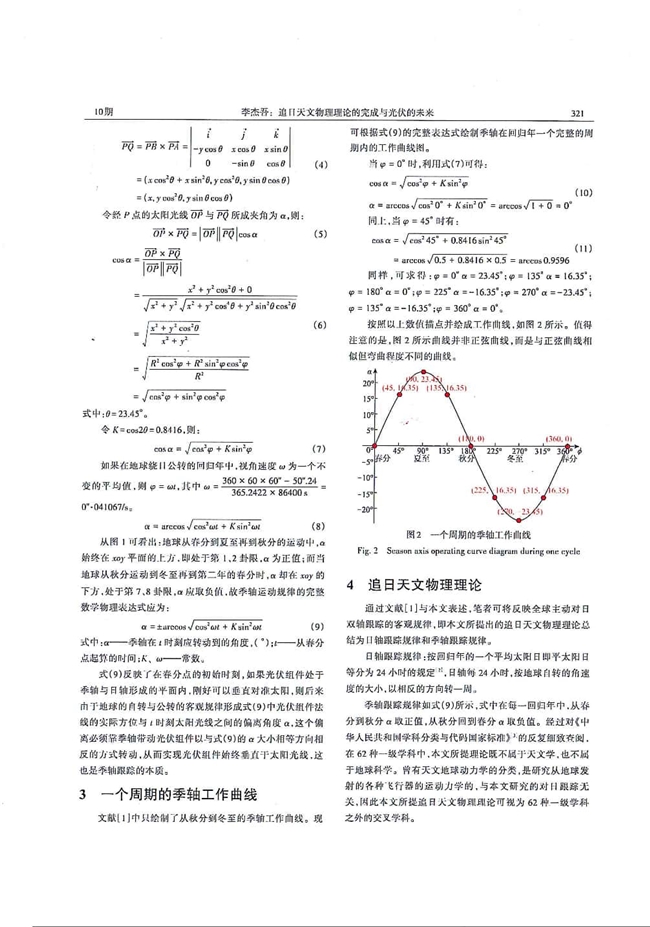
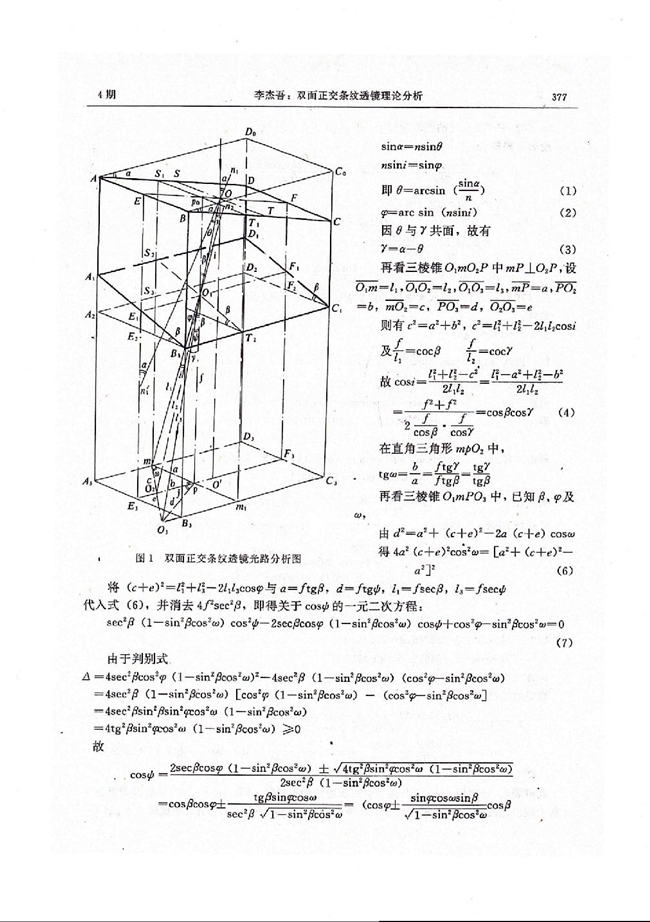
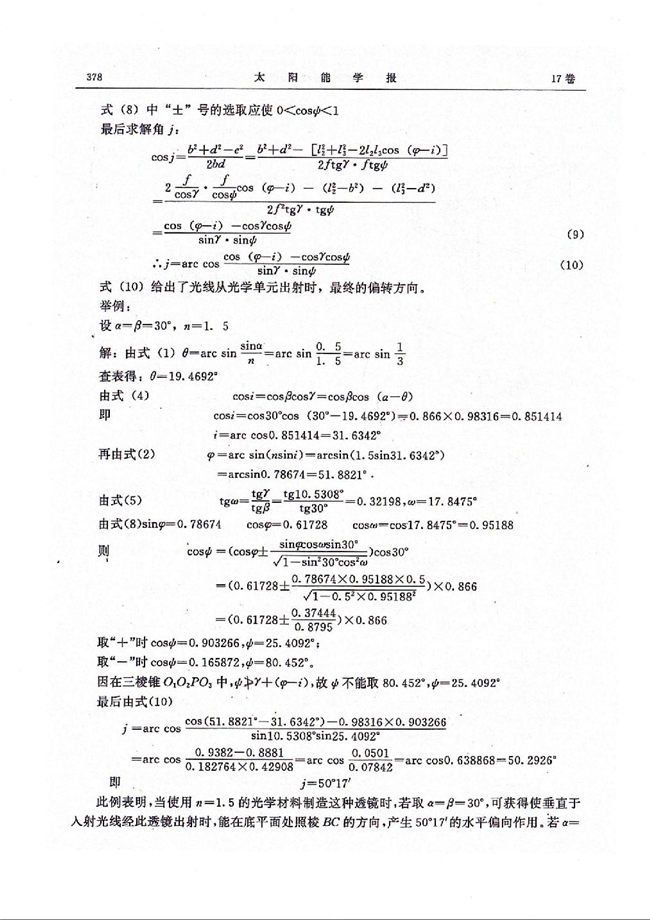
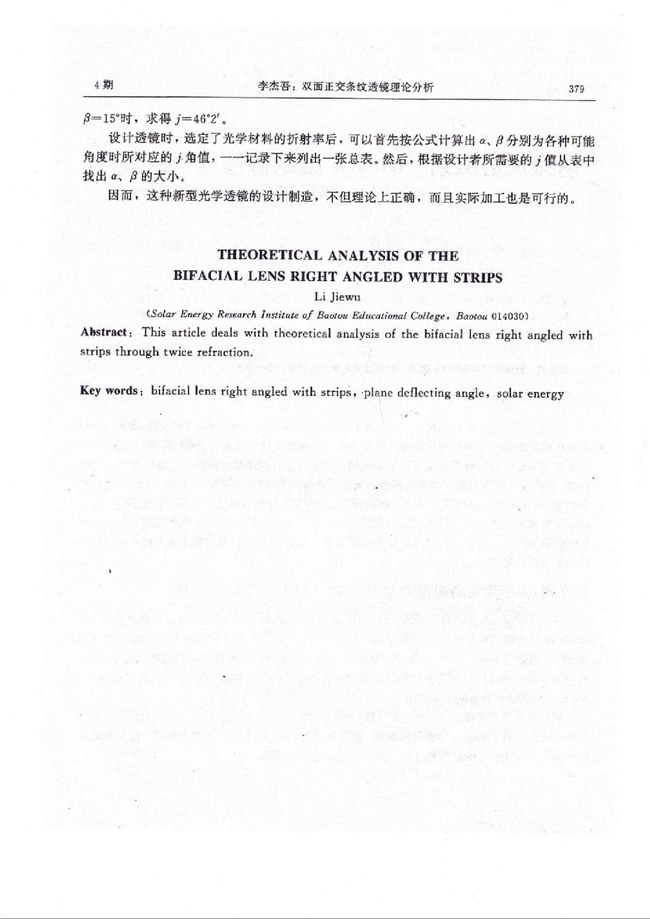
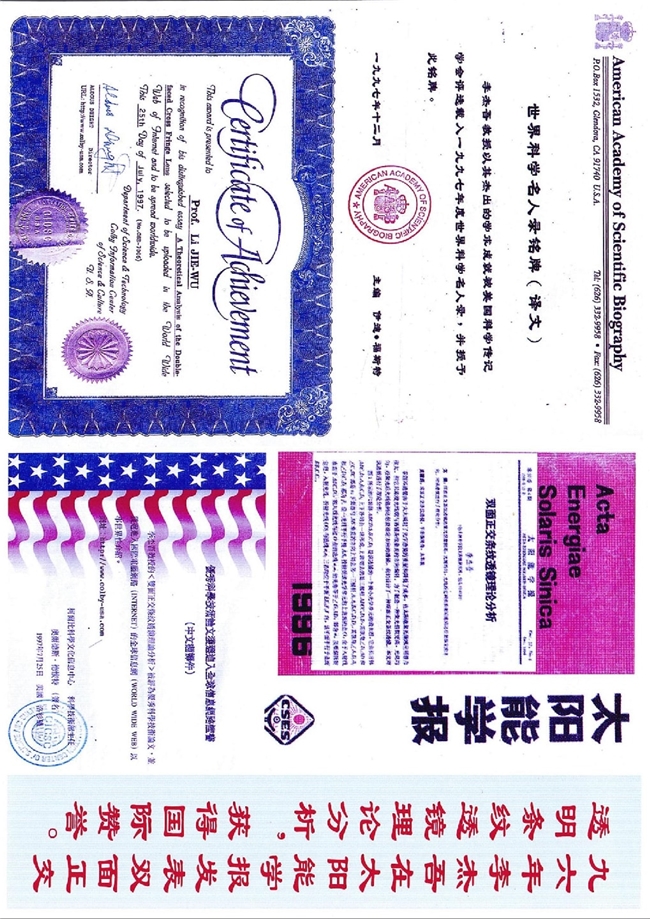
2018 年,时年 78 岁的李杰吾在《太阳能学报》第 39 卷第 11 期发表《主动对日双轴跟踪物理理论》。2025 年,85 岁的他再次在该刊第 46 卷第 10 期发表《追日天文物理理论的完成与光伏的未来》。这两篇论文完整呈现了他的原创理论:
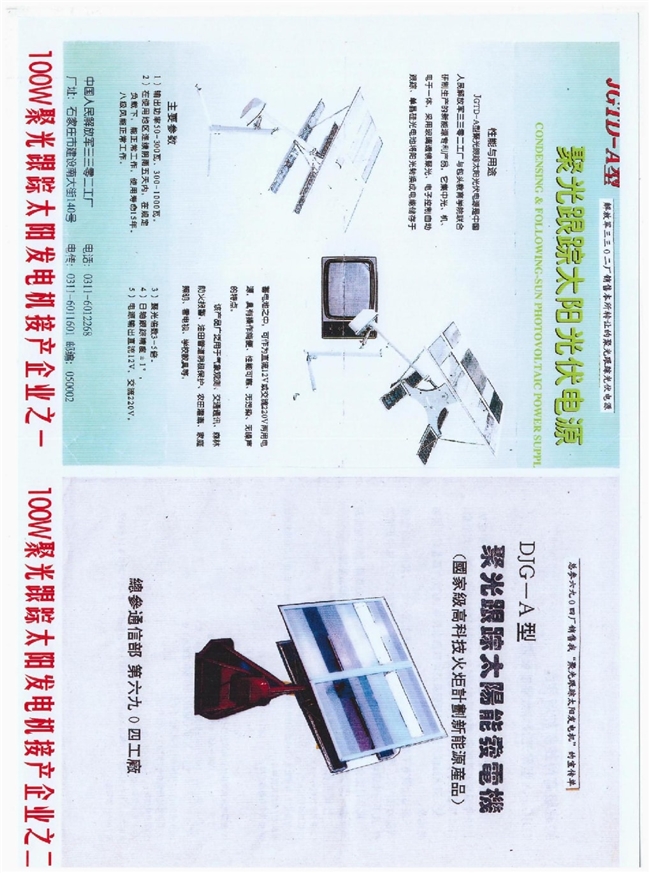
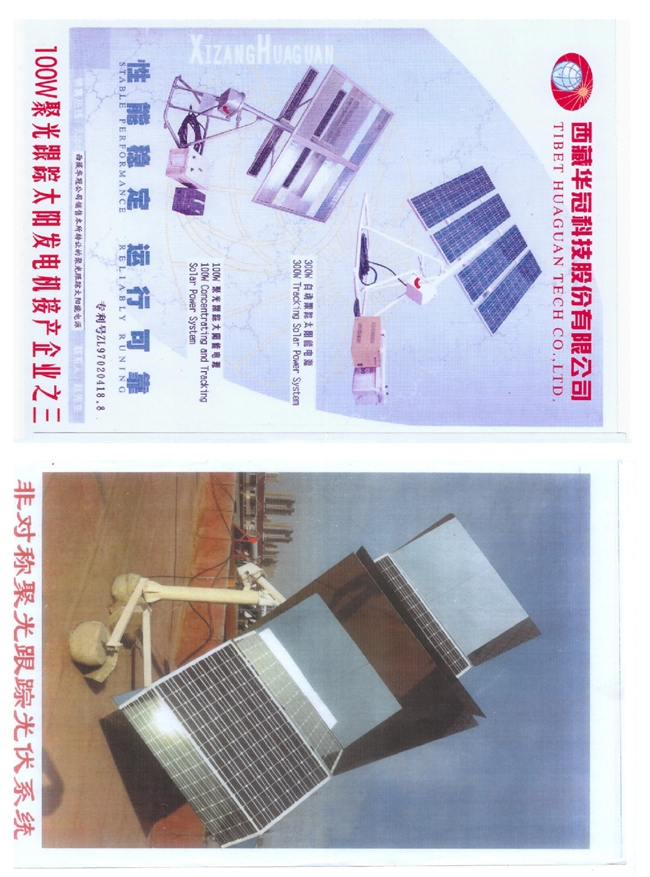
仅用一个包含时间 t 为唯一自变量的一元方程,与熟知的日轴 24 小时转一周结合,便精确描述了地球上任意一处追踪太阳运动轨迹的普遍规律,经四台样机六年的实践证明,这种客观自然规律的决定论,简明可靠,优于旧理论从假想天球概念推出的五个方程及依赖人工智能求解全球“太阳方位角与高度角”超大数据库的大概率计算,是物理学“ 复杂源于简单” 的精彩呈现。2017 年,77 岁的李杰吾科研团队发明“定日聚光光伏发电机的跟踪装置” 并申请专利;2024 年 10月,84 岁的他获国家知识产权局授予的发明专利权(专利
号:ZL202210087735.7)。理论指导下的技术实践与理论完全吻合,印证了这项基础研究的原创性与可靠性。
实践证明:追日比固定光伏有四大优势
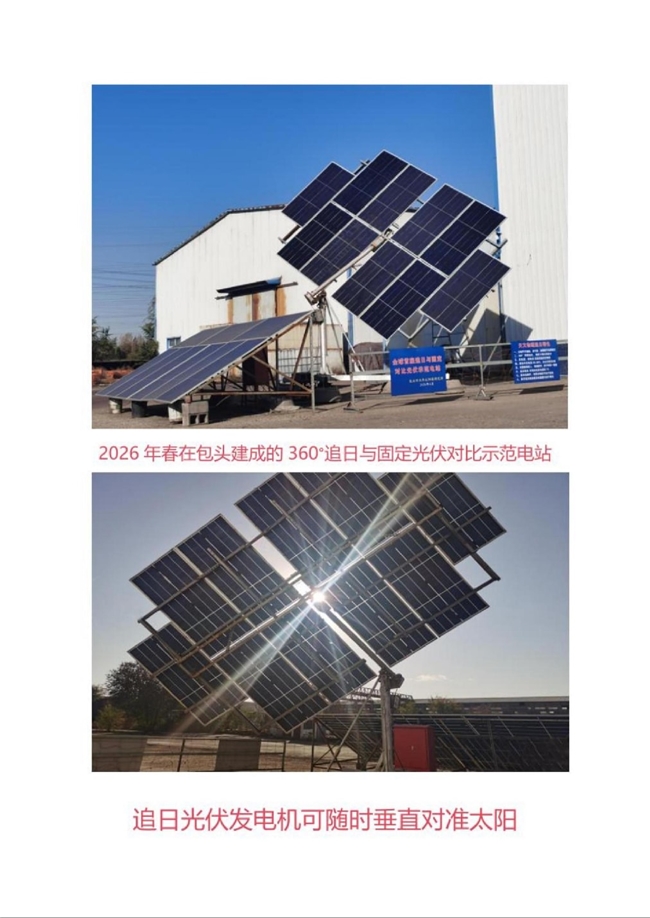
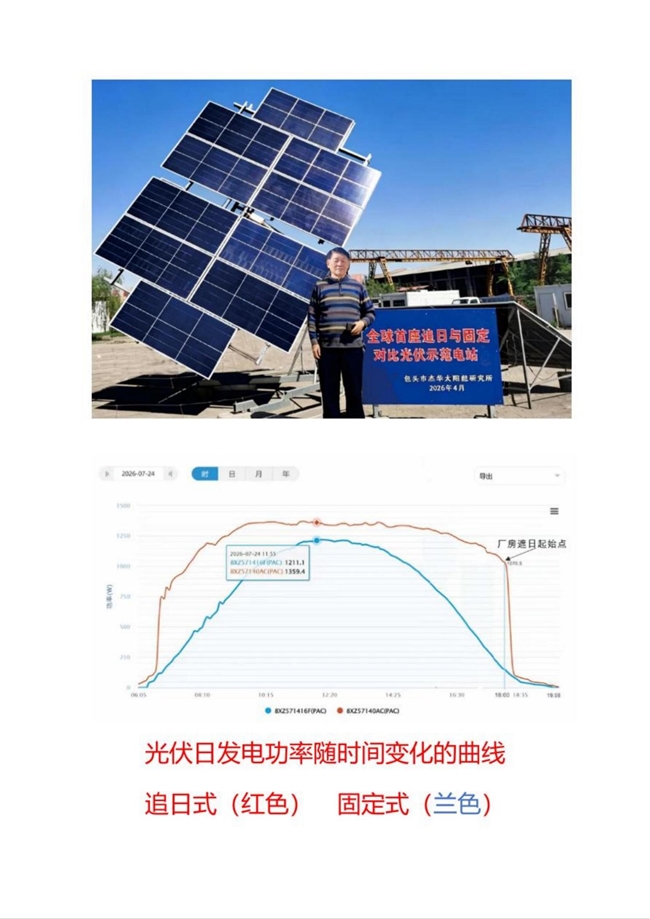
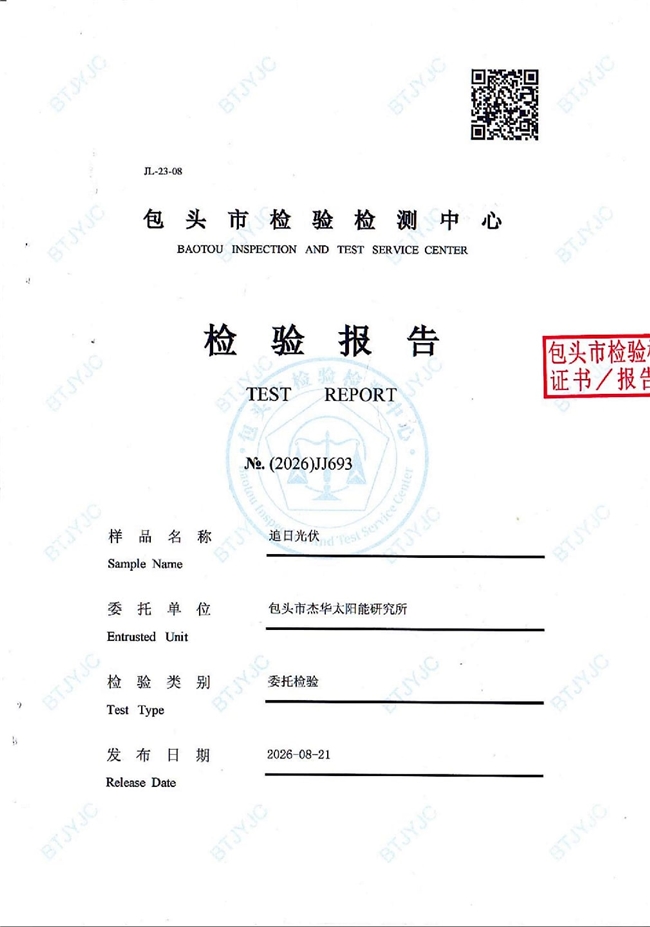
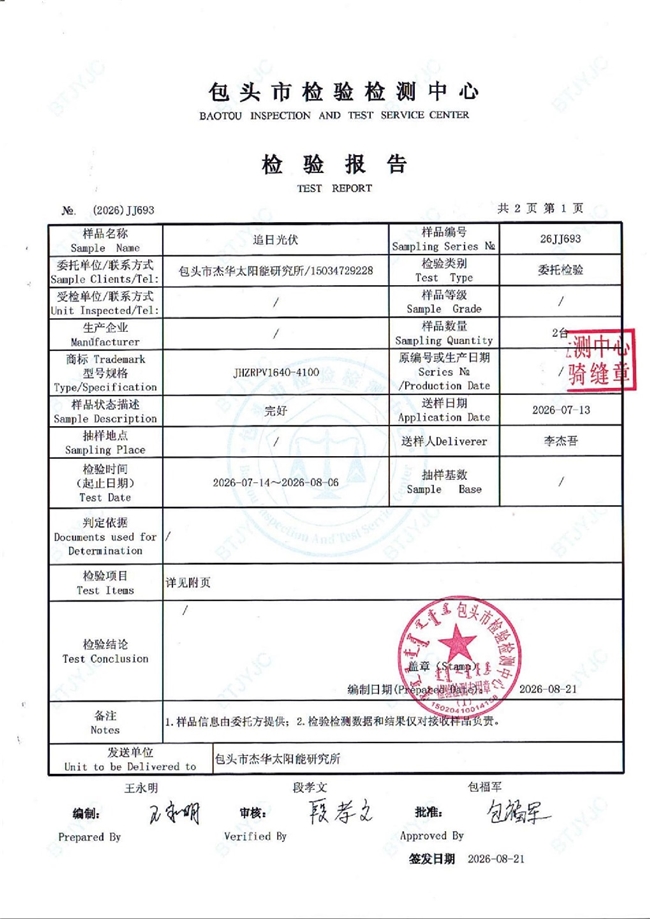
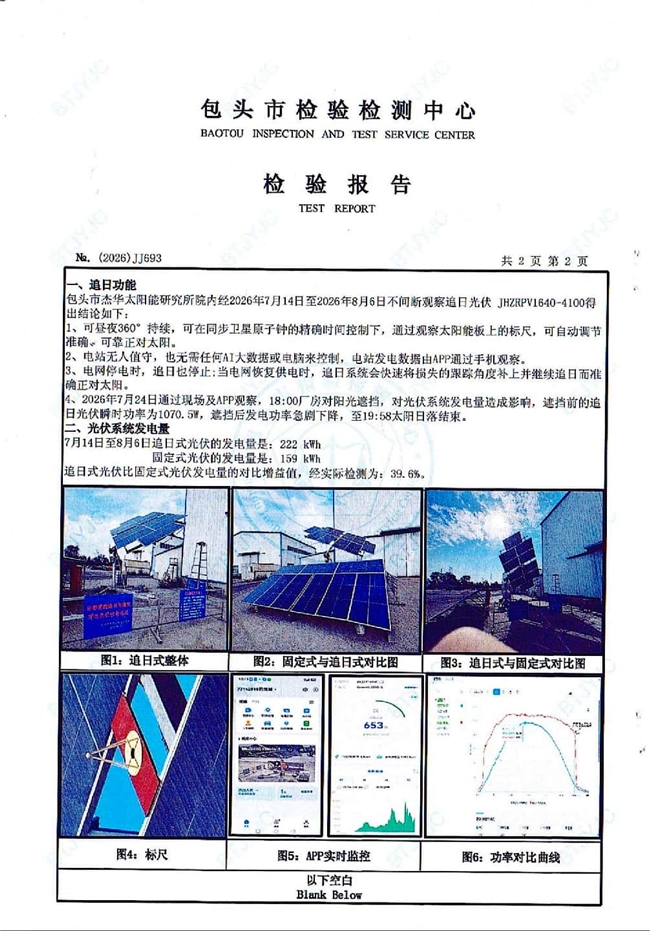
更令人动容的是,85 岁的李杰吾自筹资金、 自己设计、 自己动手,在朋友提供的空旷厂区建成一座 7 米高的 5KW 追日与固定光伏对比示范电站,2026年 4 月正式并网发电。经包头市检验检测中心三位工程师 2026 年 7 月 14 日至8 月 6 日连续 23 天检测(报告编号: No.(2026)JJ693),追日式光伏发电 222kWh,固定式光伏发电 159kWh,实测对比增益值39.6%。报告同时说明,电站西北角厂房在 18:00 至 19:58 对追日光伏造成遮挡,否则,对比增益值还会增加很多。据 10 月 1 日—8 日 APP 显示, 日对比增益平均为53%。而且因 360° 追日的光伏组件的落尘、落沙与落雪的几率,大大小于固定光伏。维护量就会大大减少。APP 显示,当追日与固定光伏一个多月不清洗时,10 月 26 日对比增益
值大到 78.08%。
这座电站只用一只 15 瓦步进电机,仅在同步卫星原子钟提供的精确时间唯一控制下,便实现 360°持续可靠、准确的昼夜追踪太阳。半年来经历九级以上大风、暴雨与沙尘暴频繁考验,完全无需人工值守也无需电脑或人工智能大数据控制。停电时追日暂停,恢复供电后系统快速补上损失角度并继续准确正对太阳。检测结论明确:这是一套“比向日葵更精确可靠的追日系统”。实践证明:追日比固定光伏有四大优势:发电量大增;维护量巨减;发电与用电时段匹配好;经济效益剧增。
太空追日光伏:未来能源的潜在方向
在同步卫星轨道上均匀部署无人值守追日光伏电站,因失重、无大气层衰减、无风、基本无地球遮挡,使追日光伏电站功率特别巨大而稳定。经仔细计算,其年发电量比同步卫星上的固定光伏提高 3 倍,比地面同样光伏电站平均提高 10 倍左右。 当采用30%高效光伏组件时,总面积达 100 公里×100 公里的轨道追日光伏电站年发电量即可超过 2025 年全球发电总量,且无需储能。该推演尚需进一步建模与同行验证,但已显示出作为未来空间能源方案的潜在价
值,也许比人工核聚变更简便可行、更安全环保。
建议国家大力支持:让原创基础研究不再孤军奋战
李杰吾教授为追求科学真理,四十五年如一 日,淡泊名利,甘于寂寞,曾婉拒国家千万拨款、卖房自筹经费,一心一意解决“ 高可靠、高精度、低成本”持续正对太阳的世界难题。他的理论、专利、论文、示范电站与第三方检测报告,
已构成一条完整的证据链。为光伏更高发展阶段提供了范例,是中国本土学者对能源科技的一项建设性献策。建议国家自然科学基金委员会重视并支持李杰吾教授科研团队的前沿能源基础研究,组织专家对“追日天文物理理论”及“ 定日光伏发电机”进行进一步调查实证,在规模中试基础上推动成果转化,使其早日领先于世界,造福于全球。
Li Jiewu: A Lifetime Dedicated to Solar-Tracking Research
In Baotou, Inner Mongolia, 86-year-old physics professor Li Jiewu, the son of a fallen revolutionary, has devoted 45 years to painstaking research. His work has taken him from developing an original theoretical approach to solar energy to leading a team in the invention and engineering validation of related
technologies. He attributes his achievements not to exceptional genius but to the lessons learned from countless unsuccessful experiments and his determination to pursue a different approach.
An Original Theory: A Single-Variable Approach to Solar Tracking
In 2018, at age 78, Li published "Physical Theory of Active Dual-Axis Solar Tracking" in Acta Energiae Solaris Sinica (Vol. 39, No. 11). In 2025, at age 85, he published "The Completion of the Astronomical- Physical Theory of Solar Tracking and the Future of Photovoltaics" in the same journal (Vol. 46, No. 10).
According to the article, these papers present a theory that uses a single equation with time (t) as its only independent variable, together with a 24-hour rotation about a solar-tracking axis, to describe the motion required to follow the Sun from any location on Earth. The author reports that six years of operation
involving four prototypes have supported the approach's accuracy and reliability.
The article argues that this deterministic formulation is simpler than conventional methods based on
celestial-sphere geometry and multiple equations, or data-intensive calculations of solar azimuth and
elevation. It presents the work as an illustration of how seemingly complex physical phenomena may be described by simple principles.
In 2017, Li's research team developed a tracking device for a stationary-position concentrating
photovoltaic generator and filed a patent application. In October 2024, Li was granted Chinese invention patent ZL202210087735.7. The article states that subsequent engineering results have been consistent with the theoretical predictions.
Field Demonstration: Four Reported Advantages Over Fixed Solar Panels
At age 85, Li financed, designed, and helped construct a seven-meter-tall, 5 kW demonstration station comparing solar-tracking and fixed photovoltaic systems. Built on an industrial site made available by friends, the station was connected to the grid in April 2026.
According to a report by three engineers from the Baotou Inspection and Testing Center (Report No.
(2026)JJ693), testing conducted from July 14 to August 6, 2026, recorded 222 kWh from the tracking
array and 159 kWh from the fixed array - a 39.6% increase for the tracking system. The report also noted that a building at the northwest corner of the site shaded the tracking array between 6:00 p.m. and 7:58 p.m., potentially reducing the measured advantage.
The station's monitoring app reportedly showed an average daily generation advantage of 53% from
October 1 through October 8. The article further suggests that the movement of the tracking modules reduces the accumulation of dust, sand, and snow, thereby lowering cleaning and maintenance needs. After both arrays had gone more than a month without cleaning, the app recorded a 78.08% generation advantage on October 26.
The tracking mechanism uses a single 15-watt stepper motor and precise time information derived from satellite-based atomic clocks. The article describes continuous 360-degree tracking without reliance on a computer or artificial-intelligence database. It reports that the station has operated through winds above Force 9, heavy rainfall, and sandstorms without on-site supervision. Following a power interruption, the mechanism reportedly compensates for the missed rotation and resumes tracking.
The article identifies four principal benefits relative to fixed photovoltaic systems: greater electricity
generation, lower maintenance requirements, better alignment of electricity production with demand, and
improved economic returns. These comparisons reflect the reported demonstration results and would benefit from broader testing across sites and seasons.
Space-Based Solar Tracking: A Possible Future Energy Direction
The article proposes deploying autonomous solar-tracking photovoltaic stations in geostationary orbit. It argues that microgravity, the absence of atmospheric attenuation and wind, and limited Earth-induced shading could allow substantial and relatively stable energy production.
Based on the author's calculations, annual generation could be three times that of fixed photovoltaic
panels on geostationary satellites and approximately ten times that of comparable ground-based
installations. The article further proposes that an orbital array covering 100 km by 100 km, equipped with photovoltaic modules operating at 30% efficiency, could produce more electricity annually than the world generated in 2025, without requiring energy storage.
These are theoretical projections, not demonstrated results. As the original Chinese text acknowledges, the proposal requires additional modeling and independent peer evaluation. The article suggests that space-based solar power may merit consideration as a future energy option, potentially offering
advantages over some other large-scale energy technologies.
A Call for Support for Original Fundamental Research
For 45 years, Professor Li has pursued his research with little regard for recognition or personal gain. According to the article, he declined a substantial offer of government funding and sold his home to finance his work. His central goal has been to develop a solar-tracking system capable of maintaining accurate alignment with the Sun at high reliability and low cost.
The article presents his theoretical papers, patent, demonstration station, and third-party test report as a body of supporting evidence for further investigation. It regards this work as a potentially constructive
contribution to the development of photovoltaic technology.
The author calls on the National Natural Science Foundation of China to support further fundamental
research by Professor Li's team. The article recommends independent expert assessment of the
proposed astronomical-physical solar-tracking theory and photovoltaic generator, followed by larger-scale pilot testing and, if validated, technology transfer and commercialization for broader public benefit.
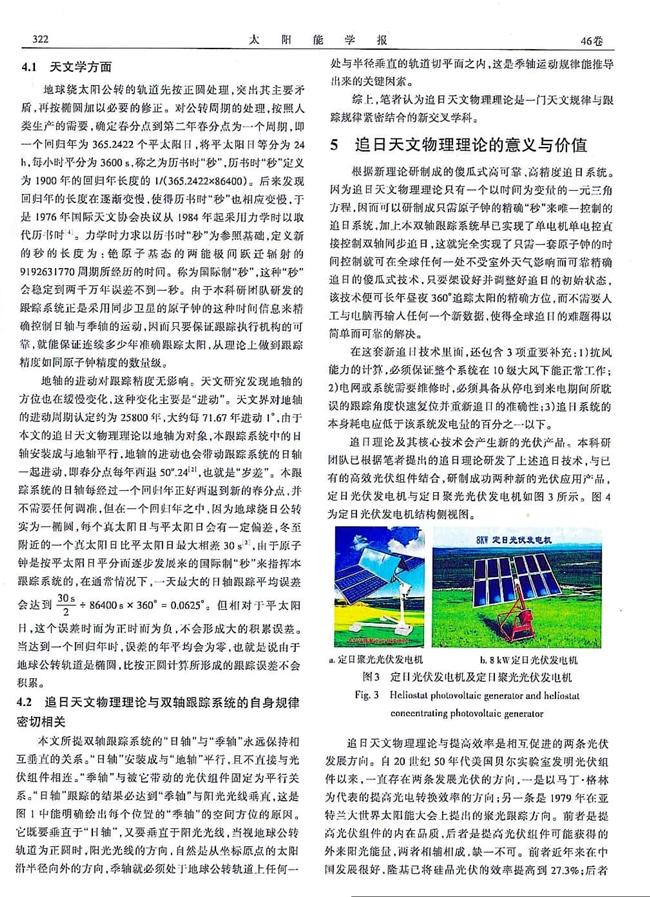
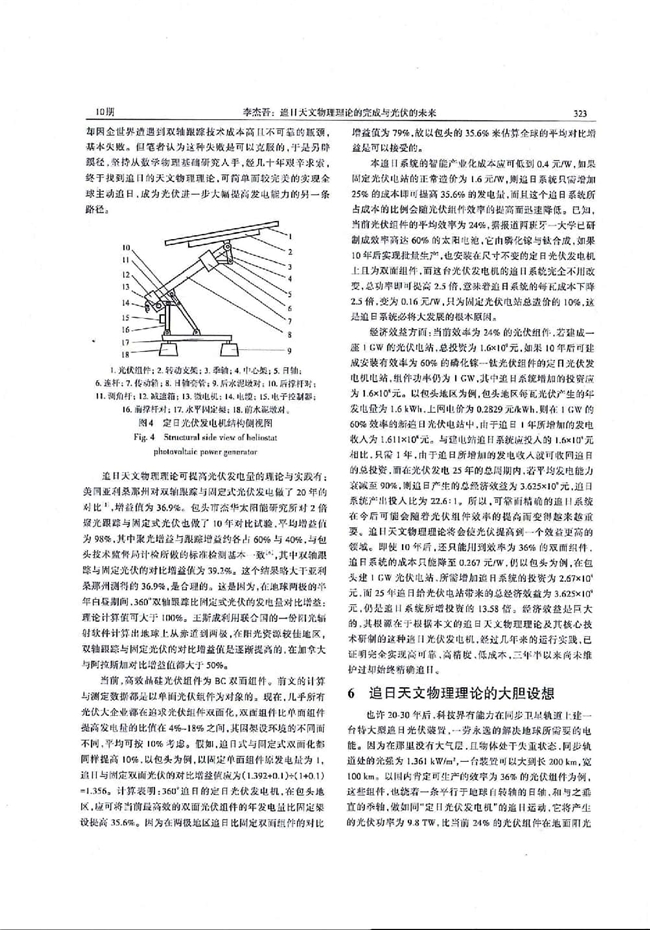
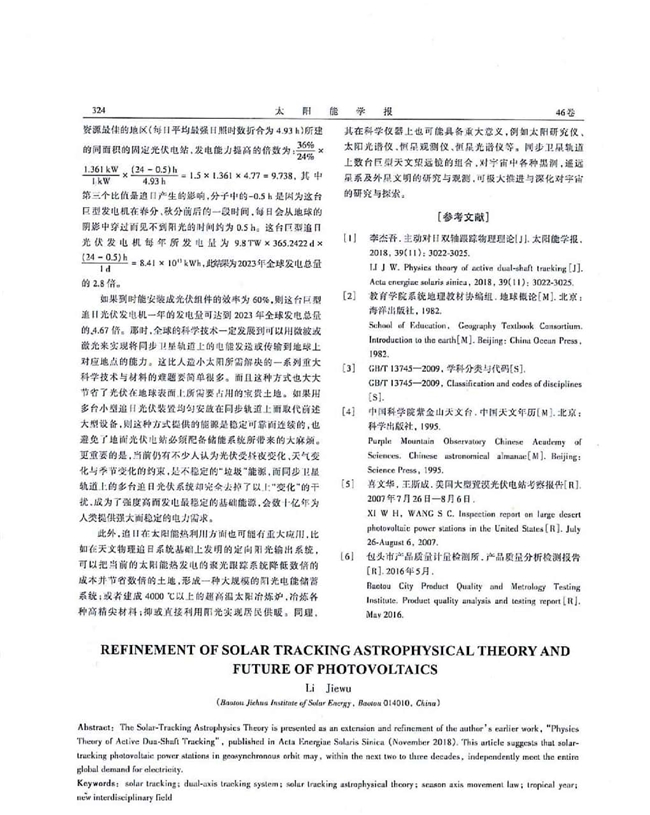
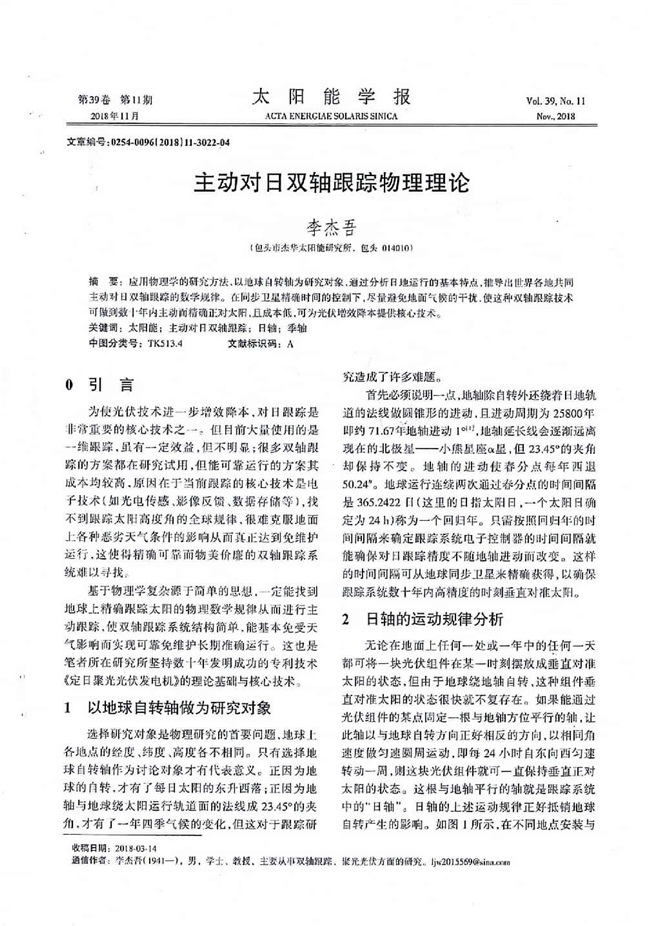

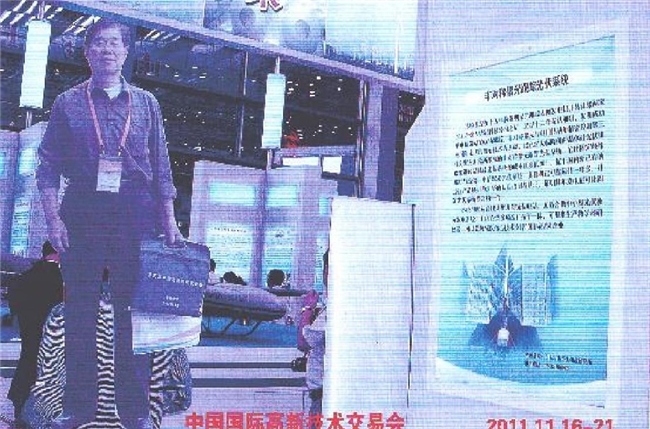
2011 年代表内蒙参加深圳国际高新技术交易会
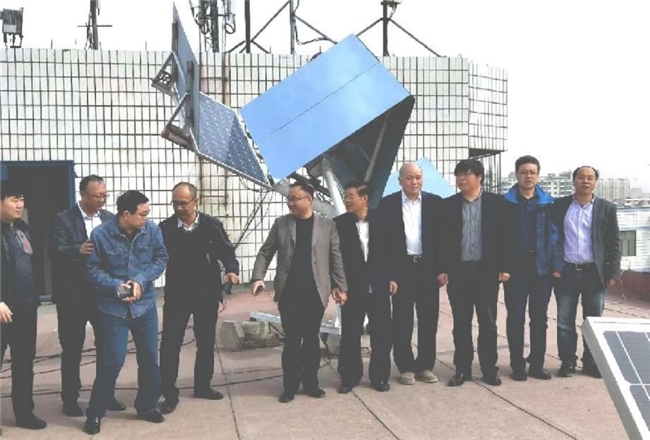
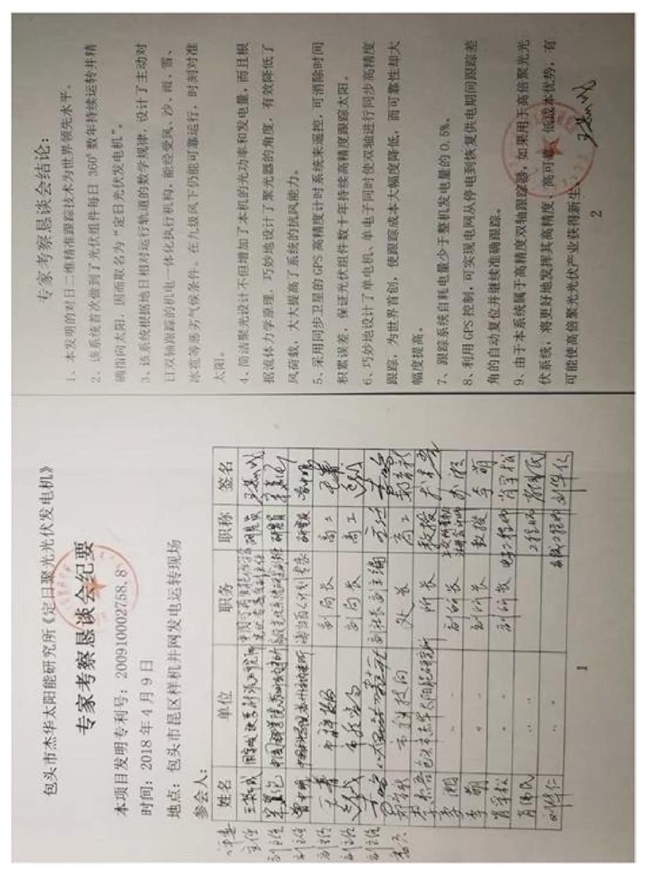
2018 年王斯成与中科院光伏专家来包头考察

2024 年请杨德仁院士在杭州初审追日天文物理理论稿

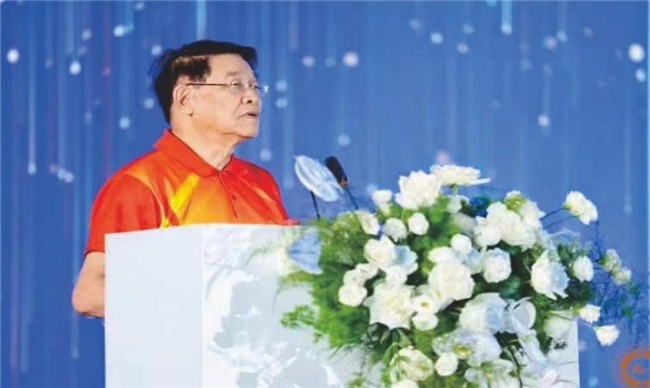
2024 年在杭州世纪大采风大会上发言
|

 Home > News >