|
摘要:文化是一个国家、一个民族的灵魂。文化兴国运兴,文化强民族强。没有高度的文化自信,没有文化的 繁荣兴盛,就没有中华民族的伟大复兴。文化更是一个民族的脊梁和灵魂,它铸造着 国家和民族的心灵和品格,一个民族有了文化自信,才能立于世界民族之林;人民有了信仰,国家才有力量,民族才有希望。而文化自信是促成这些目标的至关重要的因素。
Abstract: Culture is the soul of a country and a nation. Culture invigorates the country, and culture strengthens the nation. Without a high degree of cultural confidence, without the prosperity of culture, there will be no great rejuvenation of the Chinese nation. Culture is the backbone and soul of a nation. It casts the heart and character of a nation and a nation. Only with cultural confidence can a nation stand in the forest of nations in the world. Only when the people has faith can a country have strength and a nation have.
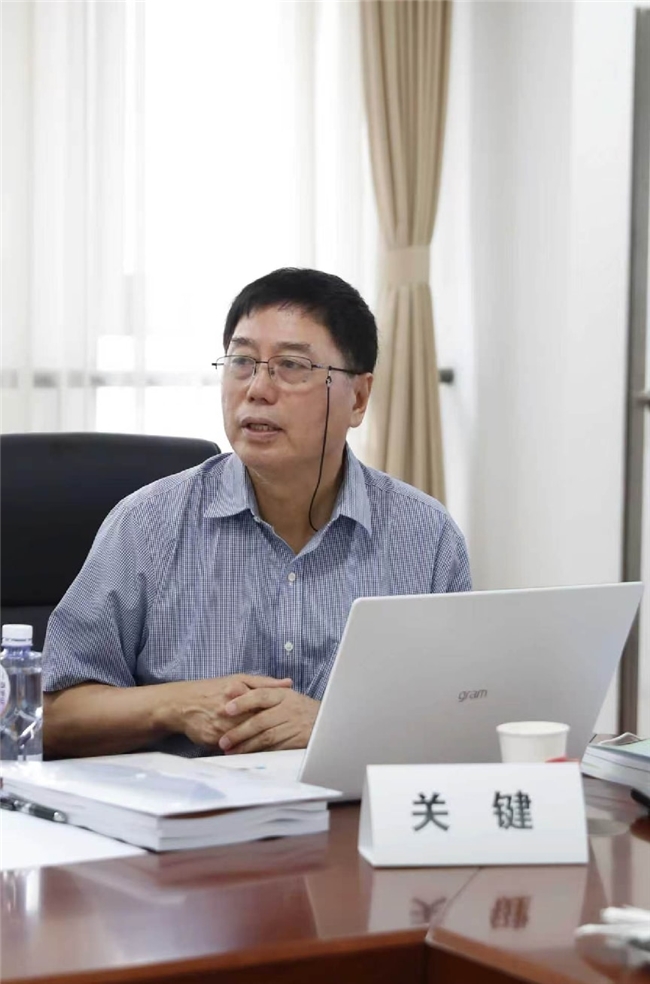
关键博士的双面人生——自然科学科研与博物馆展陈建设——构成了“自然认知重构”展览展示model理念的根基。
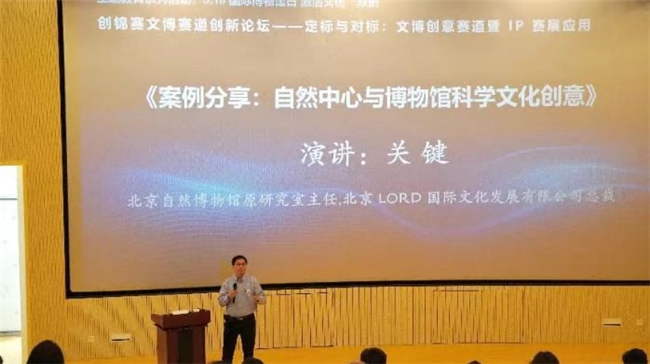
科研一面,他先后就读于北京大学地层与古生物专业、中国地质大学新生代地质学及美国衣阿华州立大学地球科学,学术功底扎实;在北京自然博物馆从事科研与展陈策划二十年,并任北美博物馆访问学者十年,在NATURE发表论文,牵头完成二十余项中美恐龙巡展的设计与组织。
展陈一面,他拥有加拿大展览公司从业经历,回国后深耕国内展览行业近二十年,积攒近百个自然博物馆策划、设计与制作项目实操经验,持续复盘行业得失,发表多篇专业文章。
科研训练赋予严谨科学思维,展陈实践锤炼对观众认知的敏锐洞察。两线交汇,建立的“自然中心@”不仅提炼出“自然认知重构”展示模型,经数年落地实践反复校准,建立了展学工坊,无题博物馆和古生物农场,印证了其可行性。这一理念,正是一位兼具深度与广度的行业老兵用半生实践回答的时代命题。
The dual life of Keyi Doctor—scientific research in natural sciences and museum exhibition construction—forms the foundation of the "Natural Cognitive Reconstruction" exhibition model concept.
In his research career, he studied stratigraphy and paleontology at Peking University, neogene geology at China University of Geosciences, and Earth sciences at Iowa State University in the United States, building a solid academic foundation. He spent twenty years conducting research and curating exhibitions at the Beijing Natural History Museum and served as a visiting scholar at museums in North America for ten years. He has published papers in Nature and led the design and organization of more than twenty Sino-American dinosaur touring exhibitions.
In terms of exhibition, he has experience working at a Canadian exhibition company. After returning to China, he has been deeply involved in the domestic exhibition industry for nearly two decades, accumulating hands-on experience in planning, designing, and producing over 100 projects for natural history museums. He continuously reviews the industry's successes and failures and has published numerous professional articles.
Scientific research training instills rigorous scientific thinking, while exhibition practice refines keen insight into audience perception. At the intersection of these two approaches, the established "Nature Center@" not only distills a "nature cognition reconstruction" display model but, through years of practical implementation and repeated refinement, has also founded exhibition learning workshops, an untitled museum, and a paleontology farm, validating its feasibility. This concept represents an answer to an era's question, provided by a veteran in the industry with both depth and breadth, who has dedicated half a lifetime to practical exploration.
一,自然认知重构:展览展示思维与AI逻辑共建
自然博物馆展览囿于“科普”标签,叙事多限于地质学与分类学,以静态标本展示为主,重收藏而轻认知更新,难以落地“人与生物圈”主题,更无法传递“生命共同体”理念。面对公众认知升级、AI普及与审美提升,亟需底层范式转型。“自然认知重构”模型应运而生,主张自然科学方法论与AI技术思维平等融合,构成展品与叙事目标间的核心中间脉络。二者逻辑本质不同:自然科学自上而下演绎(理论先行),AI自下而上归纳(数据先行)。模型构建“认知沙漏”,使科学假说与AI多维对比在验证瓶颈碰撞融合,形成人机协同的新型展陈逻辑传统展览采用单向结论输出(因为A所以B),而重构后的逻辑转向多维“证真压力测试”:自然科学提出因果链条,AI通过无限维度数据对比对该链条进行全方位检验,明确其适用范围与边界条件。核心转变是从知识传递升维至观众自主认知建模,让观众察觉自身理解自然的思维方式。为此,展陈设计需植入完整科学思维方法,并与AI认知模拟深度绑定,打造“认知健身房”模型。
I. Reconstructing Natural Cognition: Co-building Exhibition Display Thinking with AI Logic
Natural history museums, constrained by the "science popularization" label, often confine their narratives to geology and taxonomy, relying predominantly on static specimen displays. This approach prioritizes collection over cognitive renewal, making it difficult to embody the theme of "humans and the biosphere" or convey the concept of a "community of life." In light of rising public cognition, the widespread adoption of AI, and evolving aesthetic sensibilities, a fundamental paradigm shift is urgently needed. The "Natural Cognition Reconstruction" model has emerged to address this, advocating for the equal integration of scientific methodology and AI-driven thinking as the core connective thread between exhibits and narrative objectives. These two logics are fundamentally distinct: natural science proceeds deductively from theory (top-down), whereas AI operates inductively from data (bottom-up). The model constructs a "cognitive hourglass," enabling the collision and fusion of scientific hypotheses and multi-dimensional AI comparisons at the point of verification bottlenecks, thereby forging a new exhibition logic grounded in human-AI collaboration. Traditional exhibitions deliver unidirectional conclusions ("because A, therefore B"), whereas the reconstructed logic shifts toward multidimensional "truth-validation stress testing": natural science proposes causal chains, while AI subjects these chains to comprehensive scrutiny across infinite data dimensions, clarifying their applicable scopes and boundary conditions. The core transformation lies in elevating knowledge transmission to audience-led cognitive modeling, enabling visitors to become aware of their own ways of understanding nature. To achieve this, exhibition design must embed complete scientific thinking methodologies and deeply integrate them with AI-based cognitive simulation, creating a "cognitive gymnasium" model.
二,自然认知重构:展览展示model的实践
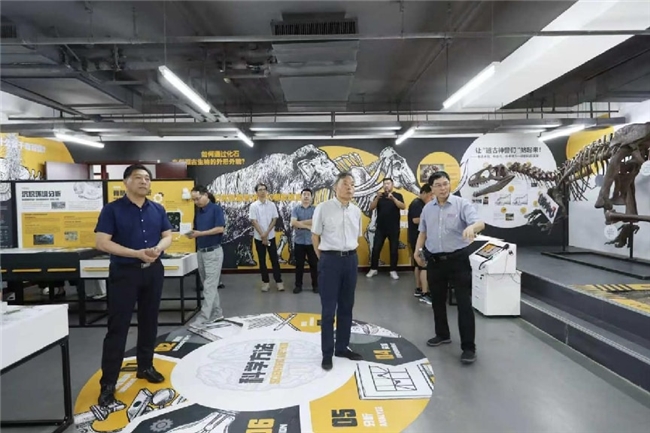
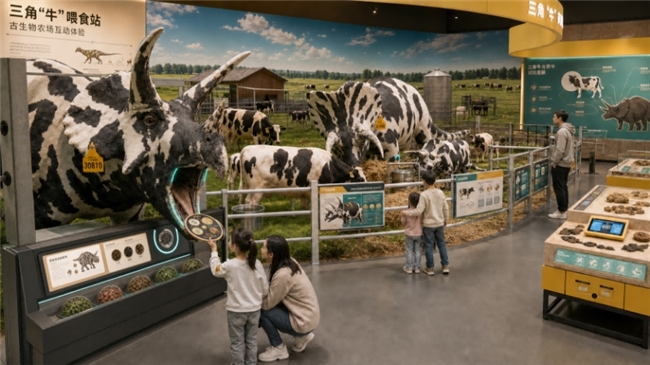
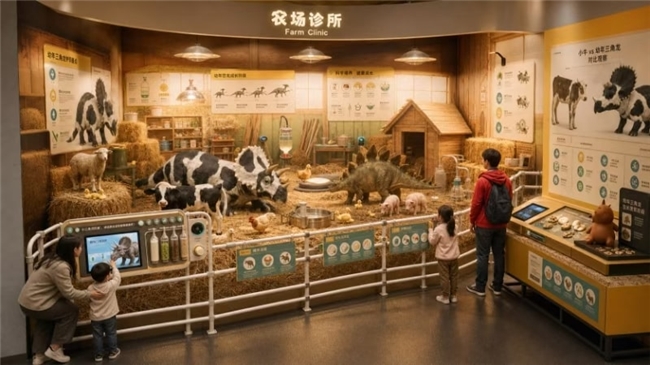
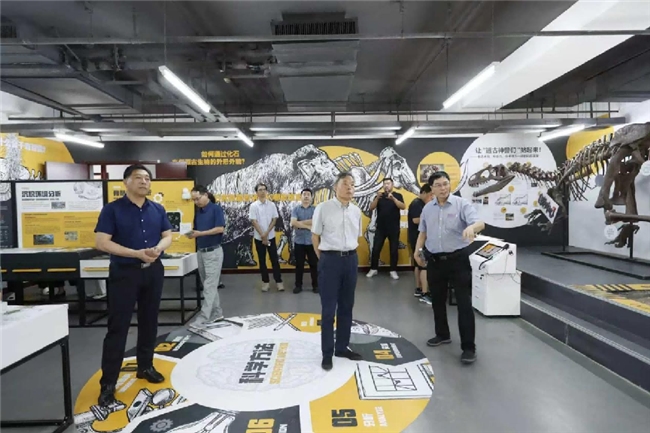
科学思维闭环“观察—假设—验证—修正”落地为展览的可操作抓手,即“对比—分析—判断”,对应三大展区:好奇与提问(实体标本激发质疑,如自然中心“库房与智慧”展区)。分析与认知(交互空间设定变量模拟,如自然中心“展学空间”建设)、判断与重构(引导深度反思综合判断,如自然中心“古生物农场”和几个生态展览的建构)。
三层与AI认知模拟双螺旋绑定,使科学方法变为可试错、可迭代的亲身体验。AI复刻推理过程,提供多维视角,实现三重强化:静态对比升级为动态规律博弈,主观感受升级为可溯源逻辑归因,认知修正即时反馈。标本不再是科普物件,而是认知刺激载体。AI引导推演环境变量改变后的演化可能,推动思维从固化分类转向动态适应,同时展示“失败假说”价值,让观众理解结论的概率性与可修正性,培养包容不确定性的思辨能力
II. Natural Cognitive Reconstruction: The Practice of Exhibition Models
The scientific thinking loop of "observation-hypothesis-verification-revision" is translated into practical, actionable elements for the exhibition, namely "comparison-analysis-judgment," corresponding to three major exhibition areas: Curiosity and Questioning (physical specimens that provoke inquiry, such as the "Storage Room and Wisdom" exhibition area at the Nature Center), Analysis and Cognition (interactive spaces with variable simulations, such as the construction of the "Exhibition Learning Space" at the Nature Center), and Judgment and Reconstruction (guiding deep reflection and comprehensive judgment, such as the construction of the "Paleontology Farm" and several ecological exhibitions at the Nature Center).
The integration of three layers with AI-driven cognitive simulation creates a double-helix bond that transforms scientific methodology into an experiential process of trial, error, and iteration. By replicating reasoning processes and offering multidimensional perspectives, this approach achieves threefold reinforcement: static comparisons evolve into dynamic games of pattern recognition; subjective impressions become traceable logical attributions; and cognitive corrections receive immediate feedback. Specimens are no longer mere objects for science popularization but serve as carriers of cognitive stimulation. AI guides the deduction of evolutionary possibilities under changing environmental variables, shifting thinking from rigid categorization toward dynamic adaptation. It also demonstrates the value of "failed hypotheses," enabling audiences to grasp the probabilistic and revisable nature of conclusions, thereby cultivating critical thinking skills that embrace uncertainty.
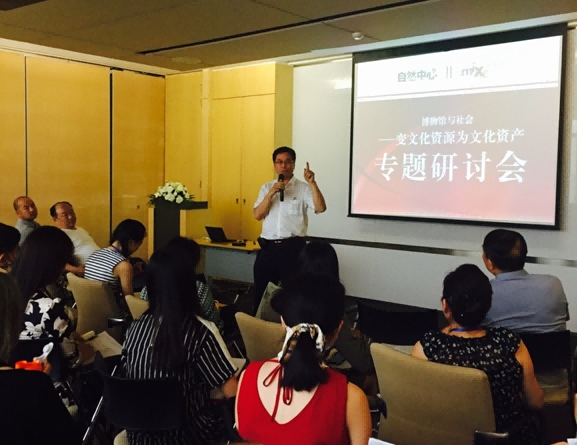
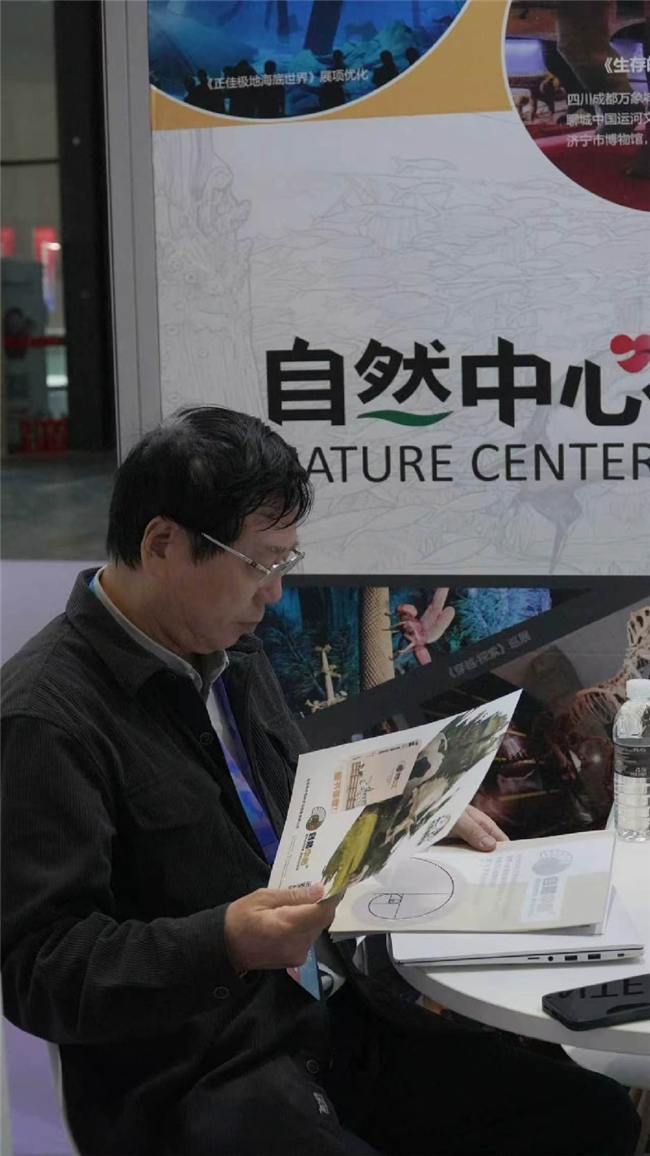
三,自然认知重构:AI参与下的展示方法应用
搭建三层展示空间:触发区以AI雷达图充当“外挂大脑”,弥补感官局限;模拟区设交互操作台,调节环境变量实时演化多条路径并显示概率,为品牌核心(如临沂“人与生物圈”展学空间);审判区展示多算法差异结论,AI输出置信度引导自我修正,可延伸苏格拉底方式,元宇宙,元认知方式,带入级联效应等方法手段,核心逻辑不变。最终目标是在人机协同反馈中,将对比、分析、判断转化为高阶生态思辨,实现从识别事物到解读复杂系统的跨越。该理念遵循四步策略:理解(提问引导认知)、构建(问题树原型)、测试(观察访谈优化)、推广(模块化融入叙事动线)。
III. Reconstructing Natural Cognition: Application of Presentation Methods with AI Involvement
Construct a three-tiered exhibition space: The Trigger Zone employs an AI radar chart as an "external brain" to compensate for sensory limitations; the Simulation Zone features an interactive workstation that adjusts environmental variables to evolve multiple pathways in real time while displaying their probabilities, serving as the core of the brand (such as the Linyi "Humans and Biosphere" exhibition and learning space); the Judgment Zone presents conclusions derived from diverse algorithms, with AI-generated confidence levels guiding self-correction. This can be extended through methods such as the Socratic approach, metaverse integration, metacognitive techniques, and cascading effects, all while preserving the underlying logic. The ultimate goal is to transform comparison, analysis, and judgment into higher-order ecological reasoning within human-AI collaborative feedback, enabling a leap from recognizing individual phenomena to interpreting complex systems. This philosophy follows a four-step strategy: Understanding (using questions to guide cognition), Construction (developing problem-tree prototypes), Testing (observing and interviewing to optimize), and Scaling (integrating modular elements into narrative flows).
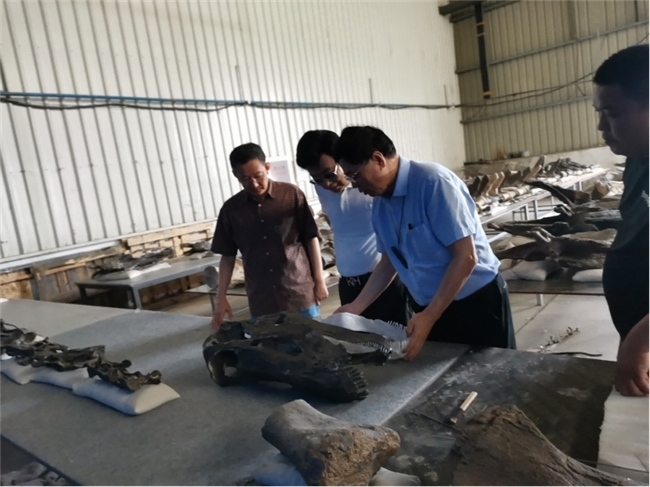
认知的转向:关键博士与"自然认知重构"的展览革命
在自然博物馆的百年传统中,展柜里的化石与标本始终扮演着沉默的"权威"。观众被预设为知识的被动接收者,展览叙事被框定在地质年代与分类学的闭环之中,人与自然的互动关系被简化为单向的"科普"输出。这种范式在信息爆炸与认知升级的时代正遭遇前所未有的困境——当公众可以通过智能手机随时获取任何物种的分类信息,博物馆的价值坐标究竟应该锚定何处?
关键博士的"自然认知重构"模型,正是对这一时代之问的深刻回应。他以自然科学科研者与展览实践者的双重身份,以近三十年的中美两地经验为土壤,建构了一套将科学思维方法与AI认知逻辑深度融合的展览新范式。这不仅是展陈技术的革新,更是一场关于"博物馆何为"的观念革命。
The Shift in Perception: The Exhibition Revolution of Key Doctors and "Natural Cognitive Reconstruction"
In the century-long tradition of natural history museums, fossils and specimens in display cases have always served as silent "authorities." Visitors are pre-assumed to be passive receivers of knowledge, with exhibition narratives confined within a closed loop of geological epochs and taxonomy. The interaction between humans and nature is reduced to a one-way output of "science popularization." This paradigm is facing unprecedented challenges in an era of information explosion and cognitive advancement—when the public can access classification information about any species at any time via smartphones, where should the value coordinates of museums be anchored?
Dr. Guan Jian's "Natural Cognition Reconstruction" model offers a profound response to this defining question of our era. Drawing on nearly three decades of experience in both China and the United States, and operating simultaneously as a natural sciences researcher and an exhibition practitioner, he has developed a new paradigm for exhibitions that deeply integrates scientific thinking methods with AI-driven cognitive logic. This represents not merely an innovation in display technology, but a conceptual revolution concerning the very purpose of museums.
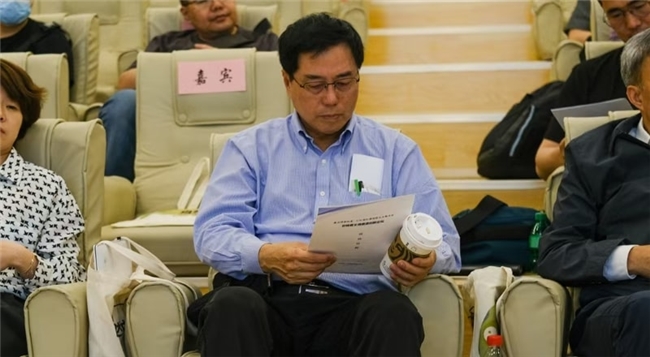
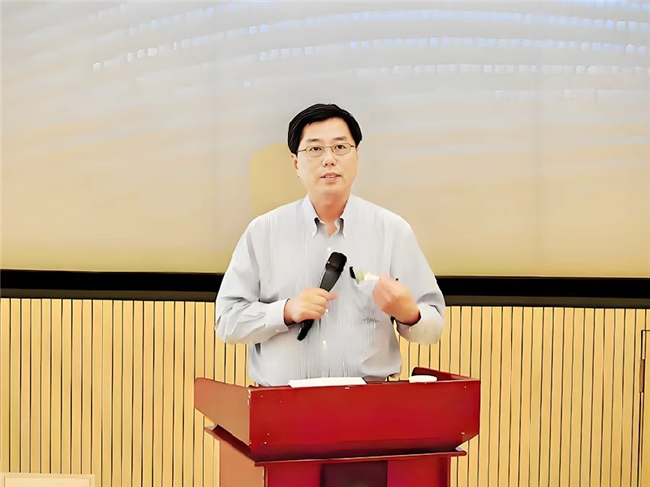
一、双面人生的交汇:科研理性与展陈洞察的化学反应
关键博士的独特之处,首先在于他那近乎不可复制的双重背景。北大地层与古生物专业、中国地质大学新生代地质学、美国衣阿华州立大学地球科学的学术训练,赋予了他严谨的自然科学方法论;而在北京自然博物馆二十年的科研与展陈策划、北美博物馆十年访问学者经历,以及加拿大展览公司的实操经验,则淬炼出他对观众认知机制的敏锐洞察。这种"科研者"与"展陈者"的身份叠合,使他能够从两个维度同时审视博物馆的核心矛盾——知识的精确性与传播的有效性之间如何达成平衡。
当多数展览从业者关注的是"如何呈现已知",关键博士思考的却是"如何激发未知"。他在NATURE发表论文的学术高度,使他拥有从科学前沿回望展览叙事的制高点;而近百个自然博物馆项目的实操积累,则让他对行业痛点有着切肤的体认。这种深度与广度的交织,使他提出的"自然认知重构"模型具备了理论的自洽性与实践的可行性——它不是空中楼阁式的概念演绎,而是经过"展学工坊""无题博物馆""古生物农场"等落地项目反复校准的经验结晶。
I. The Convergence of Dual Lives: A Chemical Reaction Between Scientific Rationality and Exhibitionary Insight
The uniqueness of Dr. Guan lies first in his nearly irreplicable dual background. His academic training in stratigraphy and paleontology at Peking University, Neogene geology at China University of Geosciences, and Earth sciences at Iowa State University in the United States has equipped him with rigorous natural science methodologies. Meanwhile, his two decades of research and exhibition curation at the Natural History Museum of Beijing, his decade as a visiting scholar at North American museums, and his hands-on experience with a Canadian exhibition company have honed his keen insight into audience cognitive mechanisms. This convergence of identities—as both a researcher and an exhibitor—enables him to examine the core paradox of museums from two dimensions simultaneously: how to achieve a balance between the precision of knowledge and the effectiveness of its dissemination.
While most exhibition practitioners focus on "how to present what is known," Key Doctor contemplates "how to inspire the unknown." His academic stature, as evidenced by his publications in NATURE, grants him a vantage point to reflect on exhibition narratives from the forefront of science; meanwhile, his hands-on experience with nearly a hundred natural history museum projects gives him an intimate understanding of the industry's pain points. This intersection of depth and breadth endows his "Natural Cognition Reconstruction" model with both theoretical coherence and practical feasibility—it is not an abstract conceptual exercise, but rather an empirical crystallization refined through projects like the "Exhibition Learning Workshop," "Untitled Museum," and "Paleontology Farm."
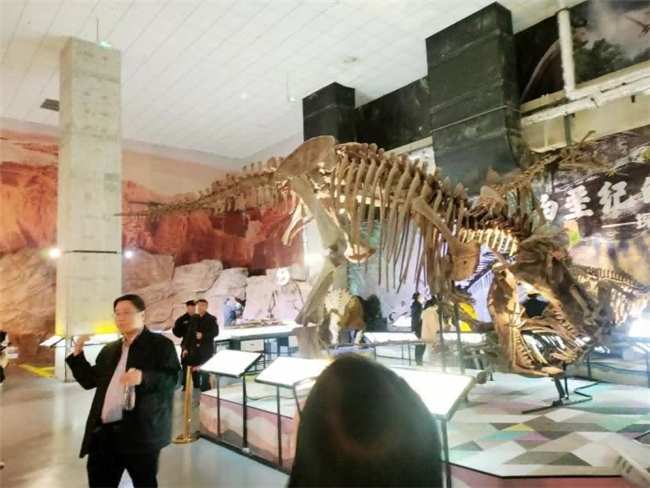
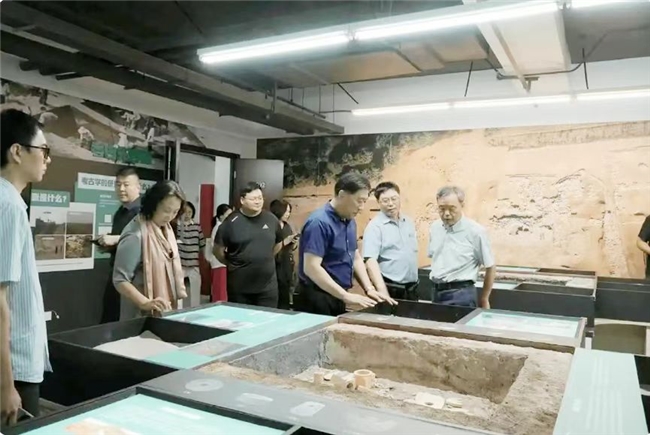
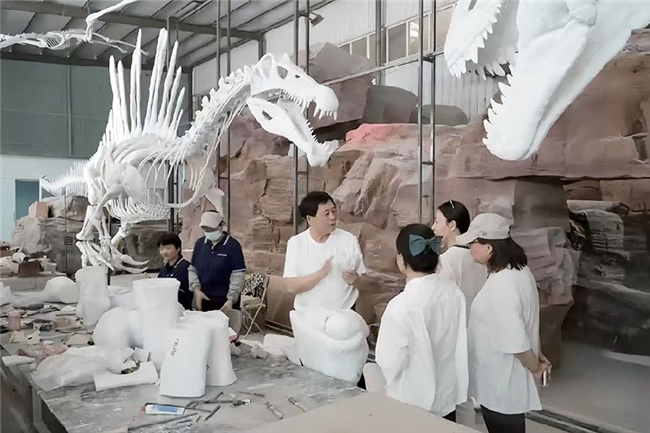
二、认知沙漏:当自然科学方法论遭遇AI逻辑
"自然认知重构"模型的核心洞见,在于将自然科学方法论与AI认知逻辑的差异转化为展览叙事的结构性张力。关键博士敏锐地辨识出二者本质的不同:自然科学遵循自上而下的演绎路径——理论先行,假说驱动;而AI遵循自下而上的归纳路径——数据先行,模式涌现。这种差异在传统认知框架中是障碍,但在他的"认知沙漏"模型中,却成为思维碰撞的熔炉。
"认知沙漏"的设计,使科学假说与AI多维对比在验证瓶颈处相遇。传统展览的"因为A所以B"式单向结论输出,被重构为多维"证真压力测试"——自然科学提出因果链条,AI通过无限维度数据对比对该链条进行全方位检验,明确其适用范围与边界条件。这一转变的意义极其深远:展览从"告知结论"升维至"呈现认知过程",观众从"被灌输者"转化为"认知建模的参与者"。
这背后是一种认识论的跃迁——让观众察觉"自己理解自然的思维方式"本身,而不仅仅是理解自然的内容。当观众意识到科学结论不是永恒真理,而是在特定条件下具有特定概率的认知模型时,批判性思维与包容不确定性的心智品质便悄然生成。这正是关键博士将展览定位为"认知健身房"的深意所在。
II. The Cognitive Hourglass: When Natural Science Methodology Meets AI Logic
The core insight of the "Natural Cognition Reconstruction" model lies in transforming the methodological divergence between natural sciences and AI cognitive logic into a structural tension within the exhibition narrative. The key doctoral researcher keenly discerns their fundamental differences: natural sciences follow a top-down deductive path—theory first, hypothesis-driven—whereas AI follows a bottom-up inductive path—data first, pattern-emergent. While this distinction poses an obstacle within traditional cognitive frameworks, in his "Cognitive Hourglass" model, it becomes a crucible for intellectual collision.
The design of the "Cognitive Hourglass" brings scientific hypotheses and AI-driven multi-dimensional comparisons together at the point of verification bottlenecks. Traditional exhibitions, which deliver unidirectional conclusions in an "because A, therefore B" format, are reimagined as multi-dimensional "truth-validation stress tests." Natural sciences propose causal chains, while AI subject these chains to comprehensive scrutiny through infinite-dimensional data comparisons, clearly defining their scope of applicability and boundary conditions. This shift carries profound significance: the exhibition evolves from merely "conveying conclusions" to "presenting the cognitive process," transforming audiences from passive recipients into active participants in cognitive modeling.
Behind this lies an epistemological leap—allowing viewers to perceive "their own way of thinking about nature," rather than merely understanding the content of nature. When audiences realize that scientific conclusions are not eternal truths but cognitive models with specific probabilities under particular conditions, critical thinking and the mental quality of embracing uncertainty subtly emerge. This is precisely the profound meaning behind Dr. Key's positioning of the exhibition as a "cognitive gym."
三、从"对比"到"判断":科学思维闭环的展览转化
"自然认知重构"模型的精妙之处,在于它将科学思维的核心闭环"观察—假设—验证—修正",转化为观众可操作的认知抓手"对比—分析—判断"。这三个环节被具象化为三层递进的展览空间,构成了一条完整的认知升级路径。
第一层"好奇与提问"(如"库房与智慧"展区),以实体标本激发观众的原始疑问,打破"博物馆即答案"的心理预设。标本不再是陈列的结论,而是引发认知挑战的起点。第二层"分析与认知"(如"展学空间"建设),通过交互空间设定变量模拟,让观众在操作中体验科学思维的逻辑结构——改变一个环境参数,观察系统的连锁反应。第三层"判断与重构"(如"古生物农场"和生态展览),引导观众在多元信息中进行综合判断,完成从碎片认知到系统理解的跨越。
这三层结构与AI认知模拟的双螺旋绑定,使科学方法变为可试错、可迭代的亲身体验。AI在此扮演的角色并非"替代思考",而是"扩展认知维度"——它复刻推理过程,提供超乎人类感官局限的多维视角,使静态对比升级为动态规律博弈,主观感受升级为可溯源逻辑归因。更关键的是,AI能够展示"失败假说"的价值,让观众理解科学结论的概率性与可修正性,从而培养对不确定性的包容心态——这在确定性思维根深蒂固的教育传统中,具有深刻的启蒙意义。
III. From "Comparison" to "Judgment": The Transformation of Scientific Thinking Cycles in Exhibitions
The subtlety of the "Natural Cognitive Reconstruction" model lies in its transformation of the core scientific thinking loop—"observation, hypothesis, verification, revision"—into actionable cognitive tools for the audience: "comparison, analysis, judgment." These three steps are concretely manifested as three progressive exhibition spaces, forming a complete path of cognitive upgrading.
The first layer, "Curiosity and Questioning" (such as the "Warehouse and Wisdom" exhibition area), uses physical specimens to spark viewers' innate questions, breaking the mental assumption that "museums are about providing answers." The specimens are no longer mere displays of conclusions but rather starting points for cognitive challenges. The second layer, "Analysis and Cognition" (such as the construction of the "Exhibition Learning Space"), employs interactive spaces with variable simulations, allowing viewers to experience the logical structure of scientific thinking through hands-on operation—changing an environmental parameter and observing the system's chain reactions. The third layer, "Judgment and Reconstruction" (such as the "Paleontology Farm" and ecological exhibitions), guides viewers to make comprehensive judgments based on diverse information, achieving a leap from fragmented cognition to systematic understanding.
The integration of these three structural layers with AI-driven cognitive simulation creates a double-helix binding that transforms the scientific method into an experiential process of trial and error and iteration. In this context, AI does not "replace thinking" but rather "expands cognitive dimensions": it replicates reasoning processes, offering multi-dimensional perspectives that transcend human sensory limitations. This elevates static comparisons into dynamic games of pattern negotiation and upgrades subjective impressions into traceable logical attributions. More critically, AI can demonstrate the value of "failed hypotheses," enabling audiences to grasp the probabilistic and revisable nature of scientific conclusions. This fosters a mindset of tolerance toward uncertainty—a profound Enlightenment impact within educational traditions deeply rooted in deterministic thinking.
四、三层空间与四步策略:理念的系统化落地
"自然认知重构"模型并非停留在概念层面的理论宣言,而是拥有清晰的落地路径。三层展示空间的设计,体现了关键博士对观众认知规律的精准把握。
触发区以AI雷达图充当"外挂大脑",弥补人类感官在捕捉多维数据时的先天局限。观众首先被引导意识到:你所见并非全部,认知需要工具的延伸。模拟区设交互操作台,使观众能够调节环境变量,实时演化多条路径并显示概率。这里是整个模型的核心动作场域——观众在"如果……会怎样"的追问中,亲历复杂系统的非线性特征。审判区则展示多算法差异结论,AI输出置信度,引导观众进行自我修正与高阶判断。苏格拉底式的追问、元宇宙的沉浸、元认知的反思、级联效应的推演——这些方法手段虽形式各异,但核心逻辑始终统一:在持续的人机协同反馈中,将对比、分析、判断转化为高阶生态思辨。
与此配套的四步策略——理解(提问引导认知)、构建(问题树原型)、测试(观察访谈优化)、推广(模块化融入叙事动线)——则为该模型在不同博物馆场景中的复制与适配提供了可操作的框架。这一策略的系统性,预示着"自然认知重构"理念具备从个案实践到行业范式迁移的潜力。
Levels 4 and 3: Space and Four-Step Strategies: Systematic Implementation of Concepts
The "Natural Cognitive Reconstruction" model is not merely a theoretical declaration confined to the conceptual level; it possesses a clear implementation pathway. The design of the three-tiered display space reflects Dr. Key's precise grasp of audience cognitive patterns.
The Trigger Zone employs an AI radar chart as an "external brain," compensating for the inherent limitations of human senses in capturing multidimensional data. Viewers are first guided to realize: what you see is not everything; cognition requires the extension of tools. The Simulation Zone features interactive workstations that allow viewers to adjust environmental variables, dynamically evolve multiple pathways, and display their associated probabilities. This is the core operational field of the entire model—here, viewers experience the nonlinear characteristics of complex systems through the probing question, "What if...?" The Judgment Zone presents divergent conclusions generated by multiple algorithms, displays AI confidence levels, and guides viewers toward self-correction and higher-order judgment. Socratic questioning, metaverse immersion, metacognitive reflection, and cascading effect deduction—though these methods differ in form, their underlying logic remains unified: through continuous human-AI collaborative feedback, comparison, analysis, and judgment are transformed into advanced ecological speculation.
The accompanying four-step strategy—understanding (question-guided cognition), construction (problem tree prototyping), testing (observation and interview optimization), and promotion (modular integration into narrative pathways)—provides an actionable framework for replicating and adapting this model across different museum settings. The systematic nature of this strategy indicates that the concept of "natural cognitive reconstruction" has the potential to transition from individual case practices to industry-wide paradigms.
五、时代的叩问:博物馆转型的深层启示
关键博士的探索,其意义远超出展览设计的技术层面。在一个信息过载而认知肤浅的时代,在一个生态危机加剧而人类行动滞后的时代,自然博物馆如何重新定位自身的社会角色?"自然认知重构"模型给出的答案是:博物馆不应只是知识的仓库,而应成为认知方法的训练场;不应只是结论的宣示地,而应成为思维的健身房。
当公众走出"自然中心@"的展厅,他们带走的不仅是关于恐龙或生态的知识增量,更是一套可以迁移到任何陌生领域的认知工具——如何提出有效问题,如何设计验证路径,如何面对不确定性做出判断,如何在复杂系统中识别关键变量。这种"授人以渔"的展览哲学,回应了"人与生物圈"与"生命共同体"理念的深层诉求——人类需要的不是更多关于自然的知识,而是重新理解自身与自然关系的思维方式。
关键博士用近三十年的学术积累与行业实践,回答了博物馆在AI时代何为、为何、如何为的时代命题。"自然认知重构"不仅是一个展览模型,更是一种认知民主化的实践——它把原本属于科学共同体的思维方法,转化为每一位观众可以上手操作的认知工具。在人类面临气候危机、生物多样性锐减、面临生态系统崩溃的当下,这种思维方式的普及,或许比任何具体的环保知识都更为紧迫。
当博物馆从"告诉观众世界是什么"转向"帮助观众思考世界为什么如此、还可以怎样",它便从知识的终点变成了思维的起点。这,正是关键博士的"自然认知重构"留给这个时代的珍贵启示。
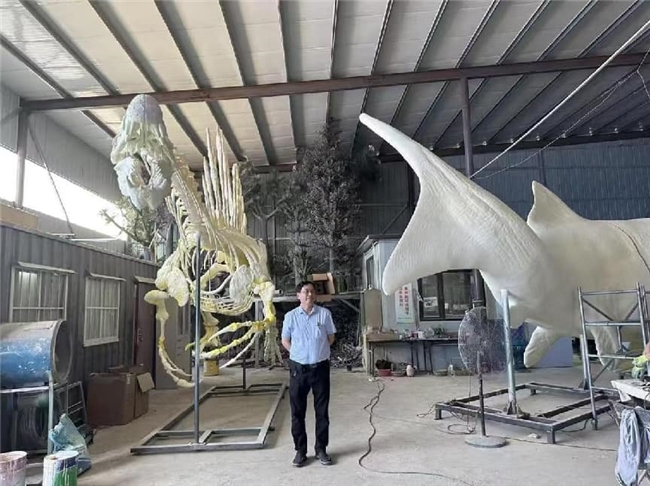
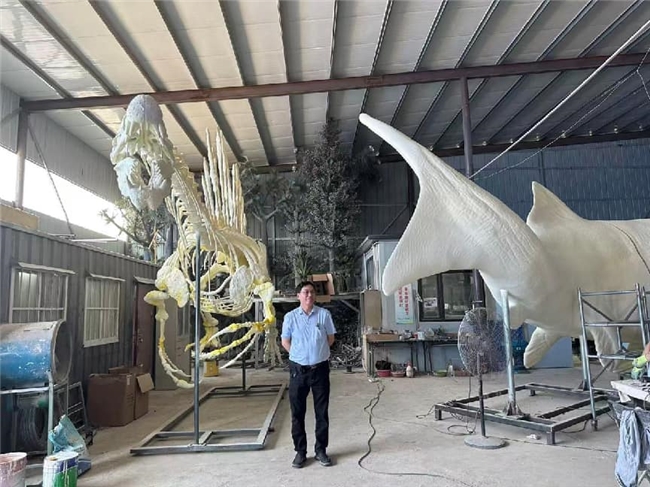
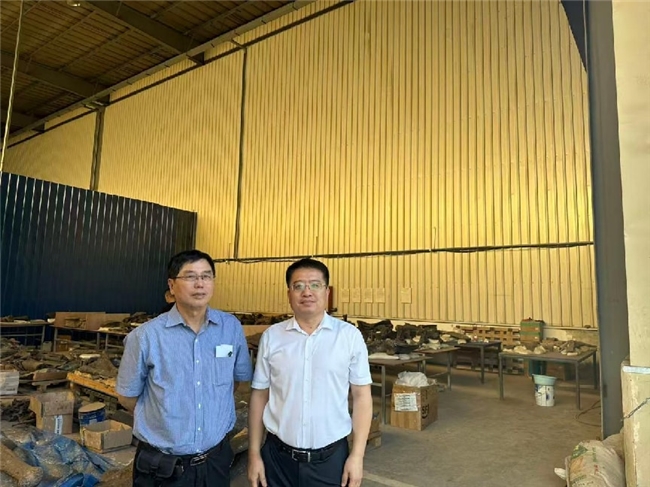
为了更多实践,关先生建立了注册商标的自然中心,并出资建立了“无题博馆和展学工坊”,并在正在建设和招商中的“古生物农场”中增加了大量智慧型,趣味型,好奇型适合科学与旅游结合,及不同形式的研学模式(展学model)。
V. Questions of the Times: Deep Insights into Museum Transformation
The significance of Key Doctor's exploration extends far beyond the technical aspects of exhibition design. In an era of information overload and superficial cognition, in a time of escalating ecological crises and delayed human action, how can natural museums redefine their social roles? The "Natural Cognition Reconstruction" model provides the answer: museums should not merely be repositories of knowledge but also training grounds for cognitive methods; they should not only be platforms for presenting conclusions but also gyms for thinking.
When the public leaves the exhibition hall of "Nature Center @", they take away not only an increase in knowledge about dinosaurs or ecology but also a set of cognitive tools that can be transferred to any unfamiliar field—how to formulate effective questions, how to design verification paths, how to make judgments in the face of uncertainty, and how to identify key variables in complex systems. This exhibition philosophy of "teaching people how to fish" responds to the deeper aspirations of the concepts of "human and biosphere" and "community of life"—what humans need is not more knowledge about nature, but a way of thinking that redefines the relationship between humanity and nature.
Dr. Guan, drawing on nearly three decades of academic scholarship and industry practice, addresses the era-defining questions of what museums are, why they matter, and how they should act in the age of artificial intelligence. "Natural Cognition Reconstruction" is not merely an exhibition model; it is a praxis of cognitive democratization—transforming ways of thinking once exclusive to the scientific community into accessible cognitive tools for every visitor. In a time when humanity faces climate crisis, rapid biodiversity loss, and the looming collapse of ecosystems, the widespread adoption of this way of thinking may be more urgent than any specific piece of environmental knowledge.
When a museum shifts from \"telling visitors what the world is\" to \"helping them ponder why the world is as it is and how it could be different,\" it transforms from an endpoint of knowledge into a starting point for thought. This is precisely the precious insight that Dr. Keyi's \"natural cognitive reconstruction\" offers to our era.
To facilitate more practical experiences, Mr. Guan established a registered trademark Natural Center and funded the creation of the "Untitled Museum and Exhibition Learning Workshop." Additionally, in the "Paleontology Farm" currently under construction and undergoing investment promotion, he has incorporated numerous intelligent, engaging, and curiosity-driven models that integrate science with tourism, along with various forms of study-tourism models (exhibition-learning models).
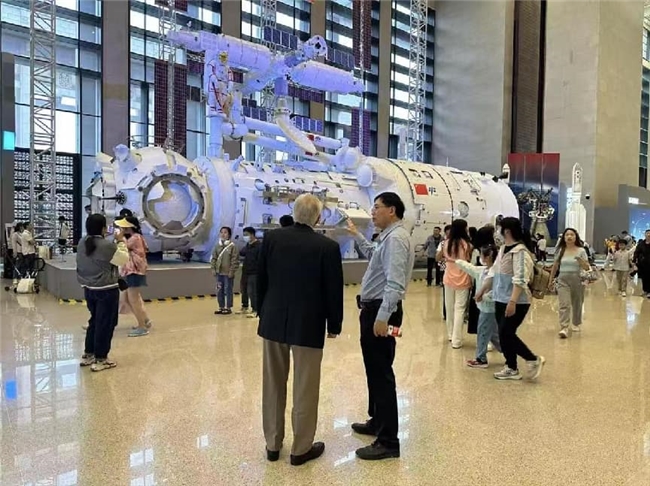
关键先生的目标是在有生之年为社会多做一些事。实际上,他已经为祖国的博物馆事业做了不少有影响的事情。
-
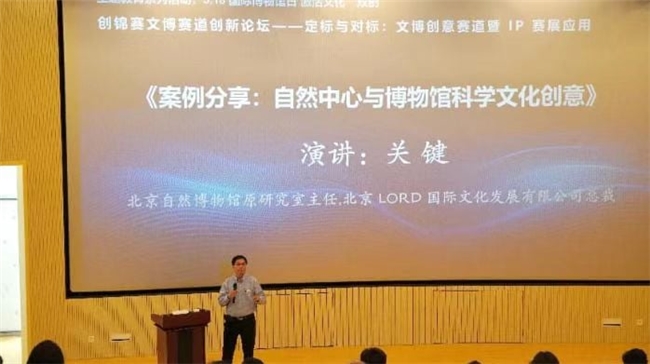
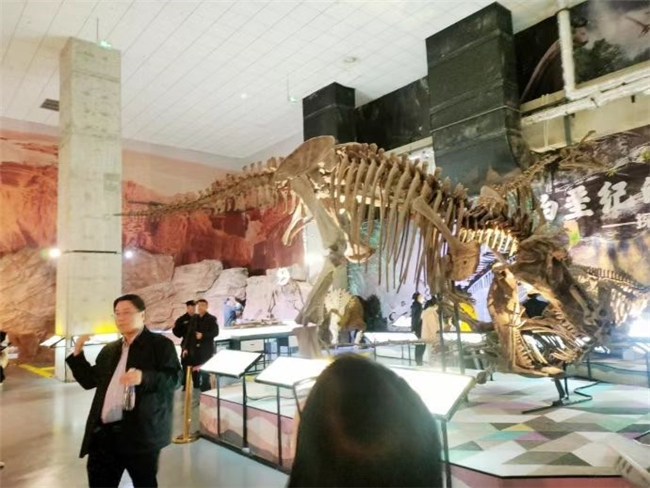
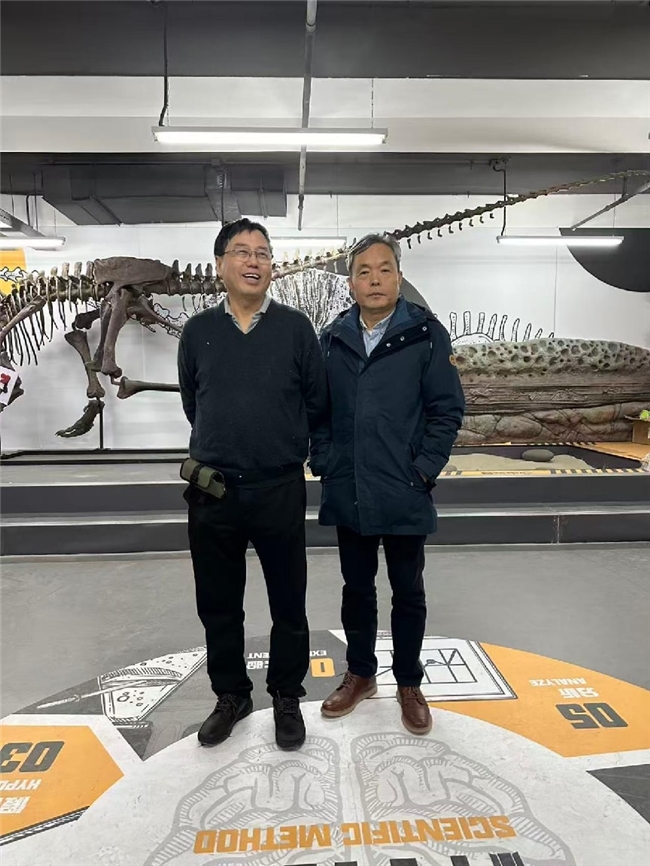
在北京自然博物馆古生物研究室(曾任主任、研究员)工作期间,他带领专业人员完成了几十次科学考察(具有国家文物局颁发的领队资格证),采集了近万件古生物化石标本,包括现在陈列于北京(国家)自然博物馆的铲齿象、库班猪、山西兽、大唇犀和阶齿兽等化石骨架,以及大量展出的新生代古哺乳动物化石。20世纪90年代,他组织赴国外巡展20余次;那个年代中国近半数出国的古生物标本展览,他都参与和组织过,其中半数以上由他亲自组织。例如,90年代在宾夕法尼亚大学举办的Dinofest展中的中方展览(汇集了近十个国内博物馆的展品),就是由关键先生组织的。关键先生不仅发表了五十余篇古生物学科研论文,
The key figure's goal is to contribute more to society during his lifetime. In fact, he has already accomplished many influential endeavors for the museum industry in his country.
-
During his tenure at the Paleontology Research Department of the Natural History Museum in Beijing, where he served as director and senior researcher, Mr. Key led professional teams on dozens of scientific expeditions (holding a team leader qualification certificate issued by the National Cultural Heritage Administration). He collected nearly 10,000 paleontological fossil specimens, including the fossil skeletons of Anancus, Kuban pig, Shanxi beast, large-lipped rhino, and step-toothed beast currently displayed at the National Natural History Museum in Beijing, as well as a vast collection of Cenozoic fossil mammals now on exhibition. In the 1990s, he organized more than 20 international touring exhibitions; during that era, he participated in and organized approximately half of all Chinese paleontological fossil exhibitions held abroad, with over half of them personally orchestrated by him. For instance, the Chinese exhibition featured at Dinofest held at the University of Pennsylvania in the 1990s—which brought together exhibits from nearly ten domestic museums—was organized by Mr. Key. Mr. Key has also published more than fifty scientific papers in the field of paleontology.
-
-
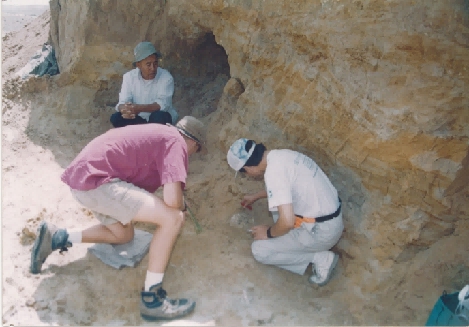
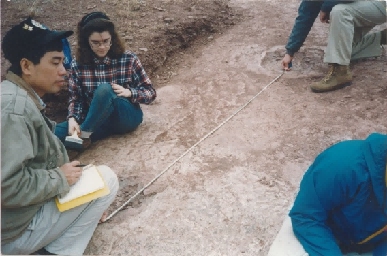
而且于90年代首次引进美国的研学项目(美国Earthwatch基金会),组织并参与了三个与美国学生和志愿者共同开展的研学项目,如宁夏丁家二沟铲齿象化石发掘、神农架鸟类考察等,取得了很好的收获,为我国博物馆科学考察与研学的结合进行了初步尝试。
2. Moreover, in the 1990s, our institution introduced the first study-abroad program from the United States (organized by the Earthwatch Foundation). We organized and participated in three collaborative research and study projects with American students and volunteers, including the excavation of mastodon fossils at Dingjia Ergou in Ningxia and bird surveys in the Shennongjia region. These initiatives yielded significant outcomes and represented an initial attempt to integrate scientific field expeditions with educational study programs in Chinese museums.
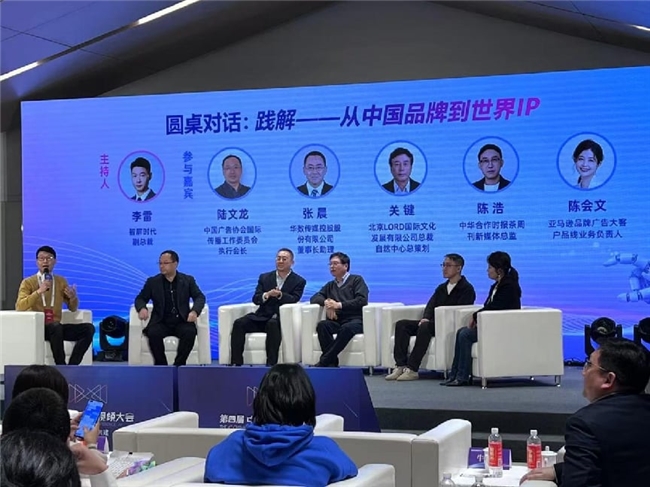
2.关键先生在与加拿大LORD文化资源与资产公司合作期间,两次与中国博物馆学会签订合作备忘录,为国内引入大量先进的理念和方法,例如"博物馆与城市软实力"理念、"MYSEUM(全民博物馆)"理念等;同时与中国博物馆学会共同组织了近十场博物馆馆长研修班,引入了大量关于博物馆和城市文化建设的书籍,参与了许多博物馆学术会议。关键先生也曾担任过两届中国博物馆学会理事。他所领导的北京LORD文化发展公司一直是博物馆企业会员,并具有设计甲级资质。
2. During his collaboration with Canada's LORD Cultural Resources and Assets, Mr. Guan signed two memorandums of cooperation with the Chinese Museum Association, introducing numerous advanced concepts and methodologies to China, such as "Museums and Urban Soft Power" and the "MYSEUM (Museum for All)" concept. He also co-organized nearly ten training seminars for museum directors with the Chinese Museum Association, introduced a wide range of books on museums and urban cultural development, and participated in many academic conferences on museums. Mr. Guan previously served as a council member of the Chinese Museum Association for two terms. The Beijing LORD Cultural Development Company, which he leads, has been an institutional member of the museum sector and holds top-tier design qualifications.

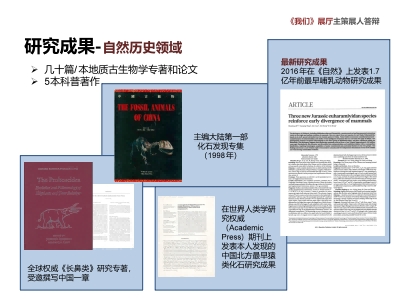
3. 关键先生一直没有间断科学专业研究工作。除了在国外发表了一些文章(如Sansansmilis等)之外,还与中科院和纽约自然博物馆合作,在《Nature》上发表了关于宋氏仙鼠的论文(恐龙时代的早期哺乳动物化石研究),并将这一重要标本(正型标本,相当于一级文物水准的藏品)赠送给北京(国家)自然博物馆。
关键先生还参与了众多国内外大型博物馆项目的前期咨询和规划,如国家海洋博物馆总体规划、国家自然博物馆规划项目中的同类对比分析(他研究了国际上150多个自然类博物馆的规划,写成同类对比分析报告,附在国家自然博物馆的规划报告里)。由于投入了大量工作,这份报告准备于近期修改出版。
关键先生自2000年开始了博物馆展览展示咨询和规划和规划, 到目前为止以为国内大型和中兴博物馆,科技馆和行业馆提供了近百个作品, 包括规划,策划,和概念设计, 还为中国科技馆设计制作了“其后沙盘”,上海科技馆的世界动物展和山东博物馆野生动物大迁徙展等等。
3. The Key Scientist has continuously pursued scientific and professional research without interruption. In addition to publishing some articles abroad (such as Sansansmilis, etc.), he also collaborated with the Chinese Academy of Sciences and the American Museum of Natural History in New York to publish a paper on the Song's Fairy Mouse in *Nature* (research on early mammalian fossils from the dinosaur era). He also gifted this important specimen (the holotype, equivalent to a first-class cultural relic) to the National Museum of Natural History in Beijing.
The Key Expert has also participated in the preliminary consultation and planning of numerous large-scale museum projects both domestically and internationally, such as the master plan for the National Ocean Museum and the comparative analysis of similar projects within the National Natural History Museum planning initiative (he studied the planning of over 150 natural history museums worldwide, compiled a comparative analysis report, which was attached to the National Natural History Museum's planning document). Due to the substantial effort invested, this report is scheduled for revision and publication in the near future.
Mr. Guan has been engaged in museum exhibition consulting, planning, and design since 2000. To date, he has delivered nearly one hundred projects for major and mid-sized museums, science and technology centers, and industry-specific museums across China, encompassing planning, conceptualization, and design. Notable works include the "Future Sandbox" for the China Science and Technology Museum, the World Animals Exhibition at the Shanghai Science and Technology Museum, and the Great Wildlife Migration Exhibition at the Shandong Museum.
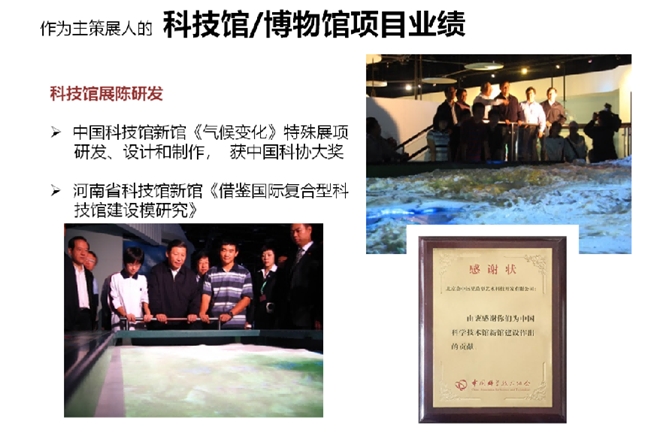
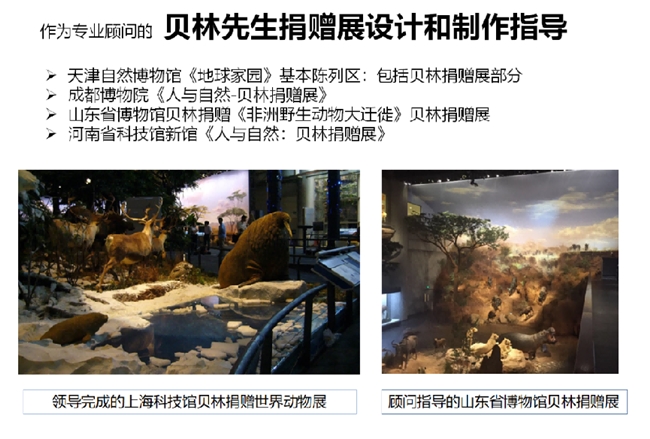
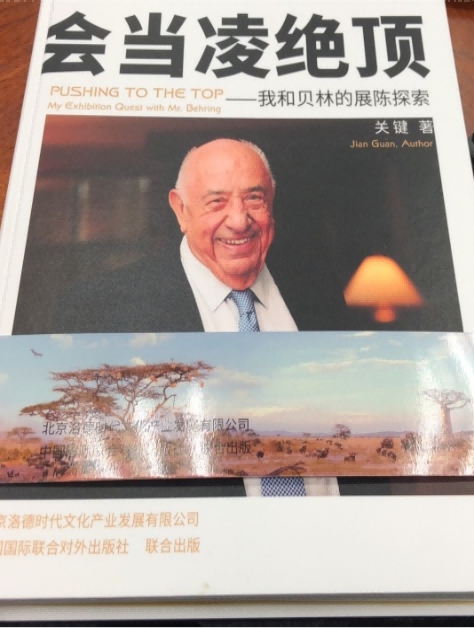
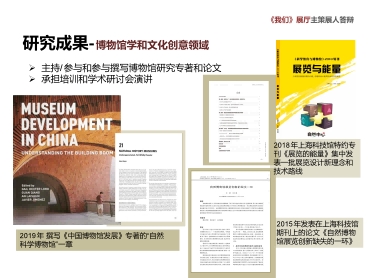
6,出版和编辑了大量的自然类博物馆展览展示规划和设计制作方法的几十篇文章和著作文章:
6. Published and edited dozens of articles and books on planning, design, and fabrication methods for exhibitions in natural history museums:
7,引入大量新技术: 为国内自然博物馆的建设事业处理,20年前引入的挤塑板雕塑和UP材料表便处理技术。引入国外互动性博物馆的多功能展台技术, 并在山东大学博物馆,临沂电影博物馆,南岭国家公园博物馆等十几个博物馆展览的到效果良好的应用。
8. Introduction of a large number of new technologies: For the construction projects of domestic natural museums, extruded board sculpture and UP material surface treatment technology were introduced 20 years ago. The multi-functional display stand technology from interactive foreign museums has been successfully applied in exhibitions at over ten museums, including the Shandong University Museum, the Linyi Film Museum, and the Nanling National Park Museum, with excellent results.
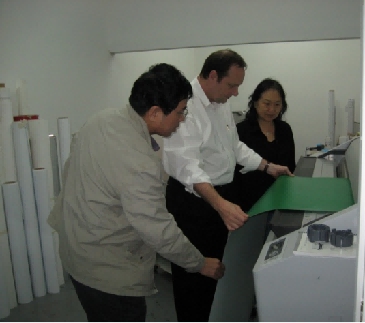
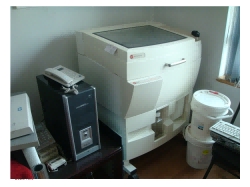
关键先生20年前引入国内的展示速膜技术和3D打印标本模型技术和设备
The Key Man introduced the display speed film technology and 3D printing specimen model technology and equipment to China 20 years ago.

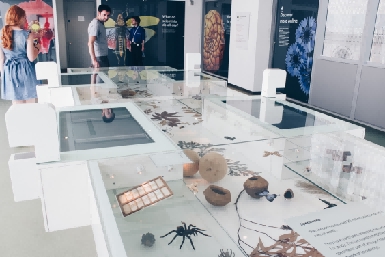
8,国内首次引入国外文化团体在博物馆义演:
7. The first time in China that a foreign cultural group was invited to perform a charity concert at a museum:
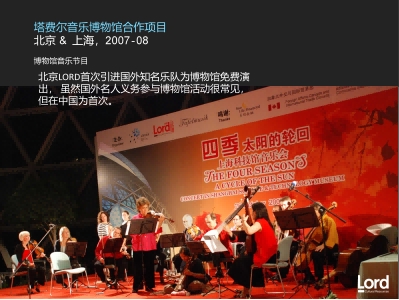
9,为了更完善因如何建立国际先进博物馆展览规划思维, 关键先生不仅与世界上最顶尖的文化创意公司合作(与加拿大LORD文化资源资产公司合作), 而且创立了自己独立的品牌商标《自然中心》, 以及、三个展示实体(古生物农场, 无题博物馆,展学工坊),同时创立了独立的自然科学博物馆展览展示model:自然认知重构展览展示model。
9. To further refine how to establish an internationally advanced museum exhibition planning mindset, Key Master not only collaborates with the world's top cultural and creative companies (partnering with Canada's LORD Cultural Resources & Assets), but also founded his independent brand trademark "Nature Center," along with three physical exhibition entities (Paleontology Farm,Untitled Museum, and Exhibition Learning Workshop). Simultaneously, he created an independent natural science museum exhibition model: the Nature Cognition Reconstruction Exhibition Model.
。
《自然中心》理念梳理文稿
国内外近百个自然科学博物馆展览展示长期积累展陈经验,却受困于 “千馆一面” 的固化范式:以分类学为核心搭建大纲、采用线性叙事逻辑、单元化分段科普。这套成熟模式虽应用广泛,却形成难以突破的固有展陈模型,也催生了《自然中心》的探索与实践。
在国际博协最新定义的启发下,自然中心锚定自然展览四大价值 --欣赏、教育、启迪/反思、共享,将启迪反思(reflection)与共享(sharing)确立为展览架构的底层原则,打造出以 “交流与服务” 为内核的古生物农场、无题博物馆、展学工坊等全新展陈模型。随着国际 “My‘seum” 理念兴起,自然中心进一步确立以“览” 为中心的全民博物馆概念:展览不再单向灌输知识,而是引导观众主动思考、主动参与,自主探寻答案。
Draft on the Concept of "Nature Center" Nearly a hundred natural science museums at home and abroad have long accumulated exhibition experience, they are trapped in the rigid paradigm of "one-size-fits-all": building outlines centered on taxonomy, adopting linear narrative logic, and conducting science popular in segmented units. Although this mature model is widely applied, it has formed an inherent exhibition model that is difficult to break through, which also gave rise to the exploration practice of the "Nature Center". Under the inspiration of the latest definition by the International Council of Museums, the Nature Center anchors on the four major values of natural—appreciation, education, inspiration/reflection, and sharing. It establishes reflection and sharing as the underlying principles of the exhibition architecture, creating entirely new exhibition models as the Paleontology Farm, Untitled Museum, and Exhibition-Learning Workshop, with "communication and service" as their core. With the rise of the international "My'um" concept, the Nature Center further establishes the concept of a museum for all centered on "viewing": exhibitions no longer unilaterally instill knowledge, but rather guide audience to think actively, participate actively, and explore answers independently.
这恰好契合 AI 时代中小型博物馆的社会使命。关键先生提出判断:大型博物馆的核心使命是藏品收藏与保护;而中小型博物馆,才是衔接社会需求、承载对话交流的主体。长久以来,自然类博物馆与公众之间固化的 “单向科普” 平衡亟待打破,重建人与生物圈的认知体系,成为自然中心持续探索的课题。由此,“自然认知重构”理念应运而生。
该理念倡导对科学概念进行多角度、多思维、多时空、多维度的认知重构,例如跳出单一分类视角理解演化;重视 “建立假说、持续验证” 的科学思维,与 AI 信息归纳推演的底层逻辑。理念区分两种展陈思维:趋同,聚焦展品本身做深度解读;趋异,把展品当作节点,链接多元视角, 多维度, 平行时空,与场景,构建完整的自然认知重构展陈体系。正如单纯堆砌信息,无法复刻达尔文式的思考发现。
This perfectly aligns with the social mission of small and medium-sized museums in the AI era. Mr. Key proposed a judgment: core mission of large museums is collection and preservation; whereas small and medium-sized museums are the main entities that bridge social needs and carry out dialogue and exchange. a long time, the solidified "one-way science popularization" balance between natural history museums and the public has urgently needed to be broken. Reconstructing the cognitive of humans and the biosphere has become a continuous exploration topic for natural centers. Thus, the concept of "Natural Cognitive Reconstruction" was born. This concept advocates for multi-perspective, multi-thinking, multi-spatiotemporal, and multi-dimensional cognitive reconstruction of scientific concepts. For example, understanding evolution by stepping out of single taxonomic perspective; emphasizing the scientific thinking of "formulating hypotheses and continuous verification," which is the underlying logic of AI information induction and deduction. The concept distinguishes between two of exhibition thinking: convergence, focusing on in-depth interpretation of the exhibits themselves; and divergence, treating exhibits as nodes to link diverse perspectives, multiple dimensions, parallel, and scenarios, thereby constructing a complete exhibition system for natural cognitive reconstruction. Just as a mere accumulation of information cannot replicate Darwinian thinking and discovery
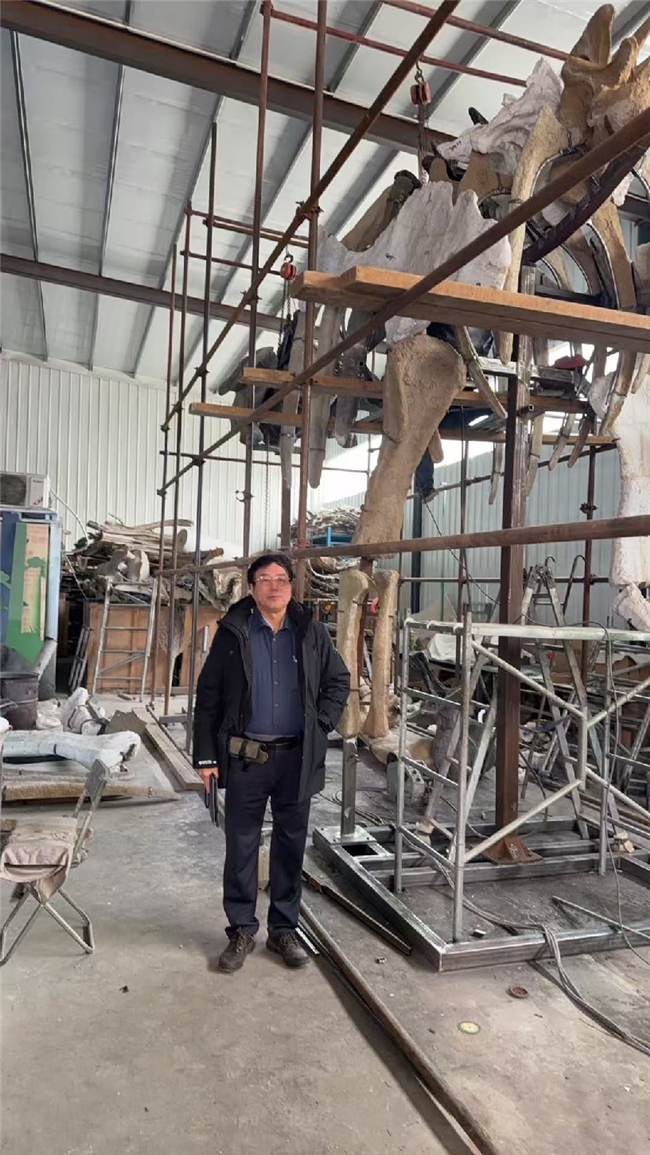
以此为根基,关键先生搭建起一套创新展陈架构模型:①库房与智慧;②核心区 + 认知更新区 + 缓冲区;③壳展览 + 文创;④nature Box + 元认知造型。这些使model建立在展览展品展示+启迪认知(体验自发认知重构过程), 而不是展品+科普教育, 同时体现未来型自然科学博物展示的体验。
Based on this, Mr. Key has built an innovative exhibition framework model: ① Warehouse and Intelligence; ② Core Area Cognitive Update Area Zone; ③ Shell Exhibition Cultural and Creative Products; ④ Nature Box Metacognitive Modeling. These allow the model to be built on the basis of exhibition cognitive inspiration (experiencing the spontaneous process of cognitive reconstruction), rather than just exhibition items popular science education, while simultaneously embodying the experience of a futuristic natural science exhibition.
|

 Home > News >