|
摘要:文化是一个国家、一个民族的灵魂。文化兴国运兴,文化强民族强。没有高度的文化自信,没有文化的 繁荣兴盛,就没有中华民族的伟大复兴。文化更是一个民族的脊梁和灵魂,它铸造着 国家和民族的心灵和品格,一个民族有了文化自信,才能立于世界民族之林;人民有了信仰,国家才有力量,民族才有希望。而文化自信是促成这些目标的至关重要的因素。
Abstract: Culture is the soul of a country and a nation. Culture invigorates the country, and culture strengthens the nation. Without a high degree of cultural confidence, without the prosperity of culture, there will be no great rejuvenation of the Chinese nation. Culture is the backbone and soul of a nation. It casts the heart and character of a nation and a nation. Only with cultural confidence can a nation stand in the forest of nations in the world. Only when the people has faith can a country have strength and a nation have.
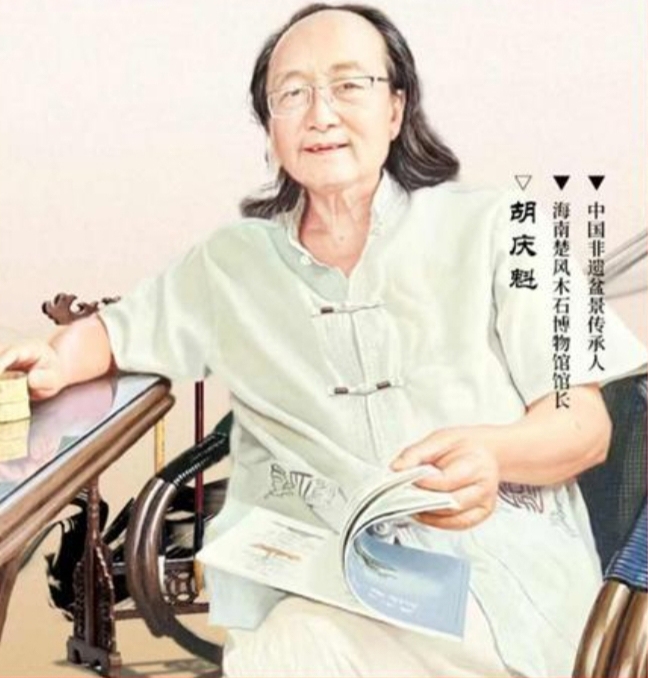
胡庆魁,男,汉族,1952年生于湖北松滋,中共党员,毕业于武汉大学生物系。中国非遗盆景传承人、中国非遗诗词传承人。
曾是农民、渔民、军人、工厂技术员、理论教员、党史工作者、杂志主编、公务员的胡庆魁,作品入编《中华英才》《读者》《散文》《天涯》《长江文艺》《中国散文大系》《艺无止境》第17辑、《中国馆藏级艺术家》第五辑、《全球艺术三巨星》《艺坛五杰》《世界美术教育史》《世界国宝级艺术名师收藏大典》《世界艺术品收藏指南》《崛起中国》《共和国不会忘记》《非遗白皮书》等典籍、文献。散文、小说选入人教版初高中语文阅读经典和试题。中英文、中法文盆景、诗词书藉被英国牛津大学、剑桥大学,法国巴黎美院、里昂国立高等美术学院等世界艺术名校收藏。2023年7月,人民日报“袭古创今”拍摄的30分钟纪录片《胡庆魁的诗意人生》收获3500万阅读量,在该栏目十年来报道的两百多位艺术家中阅读量、美誉度、影响力均名列首位。
中国艺术终身成就奖、世界艺术终身成就奖、国家文艺泰斗丰碑奖、当代散文奖、首届中国文艺至尊奖、莫奈国际艺术金奖、胡润全球艺术金笔奖、世界文艺巅峰金奖、毕加索青少年艺术大赛优秀导师奖获得者。
胡庆魁独创的“木石与诗词交响”的艺术形态,堪称前无古人,在国内外文化艺术界广受赞誉,影响深远。
胡庆魁现任海南楚风木石博物馆馆长。
Hu Qingkui, male, Han ethnicity, was born in 1952 in Songzi, Hubei Province. He is a member of the Communist Party of China and graduated from the Department of Biology at Wuhan University. He is recognized as an inheritor of China's intangible cultural heritage in bonsai art and poetry.
Hu Qingkui, who has worked as a farmer, fisherman, soldier, factory technician, theoretical instructor, Party history researcher, magazine editor-in-chief, and civil servant, has had his works included in numerous authoritative publications such as *China's Talents*, *Reader*, *Prose*, *Tianya*, *Yangtze River Literature*, *China Prose Series*, Volume 17 of *Art Knows No Limits*, Volume 5 of *China's Collection-Level Artists*, *The Three Global Art Superstars*, *The Five Great Masters of the Art World*, *History of World Art Education*, *The World Collection Guide for National Treasure-Level Art Masters*, *The Rise of China*, *The Republic Will Not Forget*, and the *Intangible Cultural Heritage White Paper*. His essays and short stories have been selected for inclusion in the People's Education Press's classic Chinese language reading materials and examination papers for junior and senior high schools. His Chinese-English and Chinese-French works on bonsai and poetry are held in collections at world-renowned art institutions such as the University of Oxford, the University of Cambridge, the École des Beaux-Arts de Paris, and the École Nationale Supérieure des Beaux-Arts de Lyon. In July 2023, the 30-minute documentary *Hu Qingkui's Poetic Life*, produced by the People's Daily under its "Inheriting the Ancient, Innovating the Modern" initiative, garnered 35 million views, ranking first in readership, reputation, and influence among the over 200 artists featured in the program's decade-long coverage.
Recipient of the China Art Lifetime Achievement Award, World Art Lifetime Achievement Award, National Monument Award for Distinguished Artists, Contemporary Prose Award, First China Art Supreme Award, Monet International Art Gold Medal, Hurun Global Art Golden Pen Award, World Art Summit Gold Medal, and Outstanding Mentor Award at the Picasso Youth Art Competition.
Hu Qingkui's groundbreaking artistic form, the "symphony of wood, stone, and poetry," is unparalleled in its kind and has received widespread acclaim in cultural and artistic circles both domestically and internationally, exerting a profound influence.
Hu Qingkui currently serves as the director of the Hainan Chufeng Wood and Stone Museum.
文化脊梁 艺界楷模
——记著名艺术家胡庆魁
蔡白玉
The Pillar of Culture and a Model in the Art World: A Profile of the Renowned Artists Hu Qingkui and Cai Baiyu
余全面了解著名艺术家、文化大家胡庆魁的艺术人生,便在心中生出敬称老先生的敬意。唯有“老先生”称谓,方能体现作为第三者对他人品修养、艺术才华、文化影响力、社会贡献的观察心得。
中国人讲究先做人后做事。人为魂,事为体,修养人品顶尖之际,所成之事亦是非同凡响。胡老先生修身济德无一日有辍,对自己淡泊名利,对别人宽厚仁爱,凡与之相处相近者,无不被他高尚情操、醇厚人格所折服。
别的不说,单就自掏腰包,创建“全海南元素”的海南楚风木石博物馆来说,这么高品质的博物馆,如果拿来赢利谋财,相信也是个天文数字!但老先生却眼中不见方孔,鼻下远避铜臭,在无外界分文支持的情况下,与家人每年花费二十多万,把一家本可以赚个盆满钵满的私博开设成了免费参观的文化高地,这在全国也是稀有鮮见!、
有些地方围河圈山而取门票,把公共资源拿来赢利。老先生倾以家私奉献公众,把自拥珍冑呈为共享美品。一比一照,能不见老先生德若中岳?
老者来此可修心,童者来此可益识。人人可来,来之有得。四面八方,人流如川,踏破了博物馆的门槛,老先生虽然分文未得,却把为人修德弃利,达济天下的美德反馈给并影响了每一位来访者。
老先生德高望重,是一座山。人民群众望高而趋,愿与山伴。他凭借一己之力传播着中国人乐奉献传美德的主流,讲述着当下最美的“中国故事”。这故事与某某寺主持眼里只有钱落个身败名裂,与某某馆长心里只装财的腐败事相比较,果然是云泥之别。老先生虽身居江湖,却有着居庙堂之高的弘修洪德,堪比脊梁!After gaining a comprehensive understanding of the artistic life of the renowned artist and cultural luminary Hu Qingkui, I developed profound respect for him by addressing him as "Old Master." Only the title "Old Master" truly reflects the observations and insights of an external observer regarding another individual's moral integrity, artistic talent, cultural influence, and social contributions.
The people of China emphasize cultivating one's character before undertaking any task. The individual is the soul, and actions are the manifestation; when one's moral integrity reaches its pinnacle, the achievements attained are likewise extraordinary. Mr.Hu never ceased his efforts in self-cultivation and virtue cultivation for a single day. He remained indifferent to fame and fortune while showing kindness and benevolence to others. Everyone who interacted with him was deeply impressed by his noble character and profound integrity.
Setting aside other considerations, take the Hainan Chufeng Wood and Stone Museum alone—funded entirely from personal resources and featuring "elements from across Hainan." For such a high-quality museum, pursuing profit would undoubtedly yield astronomical returns! Yet the elderly gentleman remained oblivious to financial gains, shunning the lure of profit entirely. Without any external funding, he and his family spent over 200,000 yuan annually to transform what could have been a lucrative private museum into a cultural hub open to free admission—a rarity nationwide. In contrast, some places encircle rivers and mountains to charge admission fees, exploiting public resources for profit. The gentleman dedicated his personal fortune to the public, presenting his cherished collection as a shared cultural treasure. When compared, does he not embody the virtue of Zhongyue?
The elderly come here to cultivate their minds, while children come to broaden their knowledge. Everyone is welcome, and each visit yields something valuable. From all directions, crowds flow like rivers; though the elderly visitor may leave without receiving any payment, they impart and influence every visitor with the virtue of cultivating moral integrity over personal gain and serving the greater good.
The venerable elder commands such profound respect that he stands like a mountain. The people look up to him and yearn to be his companion. Through his solitary efforts, he promotes the mainstream values of China—dedication and virtue—and tells the most beautiful "China stories" of our time. Compared to the corrupt practices seen through the eyes of a certain temple abbot, who cares only for money at the expense of reputation, or those witnessed by a certain museum director, who harbors nothing but greed, these stories represent an absolute world apart. Though living in seclusion, the elder possesses the lofty moral integrity and noble virtues befitting someone in high office—a true pillar of strength!
修德在巅峰,为事必非凡,光是去年一年的时光,老先生就著书14本,入典籍文献27次。这些文化非凡之事,有的成为高等院校教科书,有的成为世界高等艺术院校的教材,有的成为世界文化交流的载体,有的成为标注中国(盆景)艺术创新高度的时代坐标,广泛涉及艺术教育、中国非遗、文化流传、艺术创新等等各个方面。
特别是老先生把盆景与诗词创作完美结合的艺术创新形态,让每一件盆景都有了自己来源于中国文化底蕴的身份标签,然后又拥有了走向世界的魅力姿态。盆景+诗词的创作形态产生了超能的文化影响力,诗化盆景,盆景即诗,这的确是1+1>2的才华结晶。
作为文化活动家、艺术教育家、盆景大师、诗词名家,老先生博涉诸门,总能游刃有余地让“民族的成为世界的,让中国的成为最好的”文化愿景拥有可行通道,这就是文化复兴不止于口号,而精彩于实践创新的典范。
若有越来越多的人有此作为,那么中国的“大国崛起之路”必然会在全世界视域中拥有“文化崛起”的影响力。大国之大不唯坚炮之大,更在于文化之大。从这个角度来看,老先生的文化功德如月之皎洁,如阳之炽烈!于是老先生成为央视、人民日报、邮政总局、国家文化机构推荐表彰的楷模就是必然。
了解过往由来感其大德,向胡老先生致敬是油然而生的愿念;综观文化成就识其大才,齐心向老先生学习,则是国家文化战略走出国门影响世界不断推进的极优路途!其人坦荡,其业昭昭,为国弘艺,在所不辞。
2026年3月24日 于北京
(蔡白玉,著名艺术评论家、作家)
At the pinnacle of virtue cultivation, achievements are invariably extraordinary. In just last year alone, the venerable scholar authored 14 books and had his works included in classical texts 27 times. These remarkable cultural accomplishments have found diverse applications: some have become textbooks in higher education institutions, others serve as curricula in global art academies, still others function as vehicles for international cultural exchange, while some stand as contemporary benchmarks marking the innovative heights of China's bonsai art. Their impact spans various domains including art education, China's intangible cultural heritage, cultural dissemination, and artistic innovation.
In particular, the elderly master's artistic innovation that perfectly integrates bonsai with poetic creation endows each bonsai piece with its unique identity rooted in the cultural heritage of China, while also granting it the charm to captivate the world. This fusion of bonsai and poetry generates extraordinary cultural influence—where poetic elements permeate the bonsai itself, transforming it into poetry—a true testament to the synergistic power where 1+1>2.
As a cultural activist, art educator, bonsai master, and renowned poet, the elderly gentleman has mastered diverse disciplines and consistently navigates with ease toward realizing the cultural vision of "making the national universal and making China's the best," providing a viable pathway for its achievement. This exemplifies how cultural revival transcends mere slogans and shines through practical innovation.
If an increasing number of people undertake such actions, then China's "path to great power rise" will inevitably exert the influence of "cultural rise" within the global perspective. The greatness of a great nation lies not only in its powerful military arsenal but more importantly in its cultural greatness. From this standpoint, the cultural contributions of the venerable scholar shine as brightly as the moon and as intensely as the sun! It is therefore only natural that he has been recognized as a model figure by CCTV, the People's Daily, the State Post Bureau, and national cultural institutions.
Reflecting on his past contributions and acknowledging his profound virtue, it is a natural aspiration to pay tribute to Mr.Hu; examining his cultural achievements and recognizing his exceptional talent, uniting efforts to learn from him represents an optimal path for advancing the nation's cultural strategy internationally and exerting global influence. He is an open-minded individual whose endeavors are exemplary—he unhesitatingly dedicates himself to promoting art for the country.
March 24,2026, Beijing
(Cai Baiyu, renowned art critic and writer)
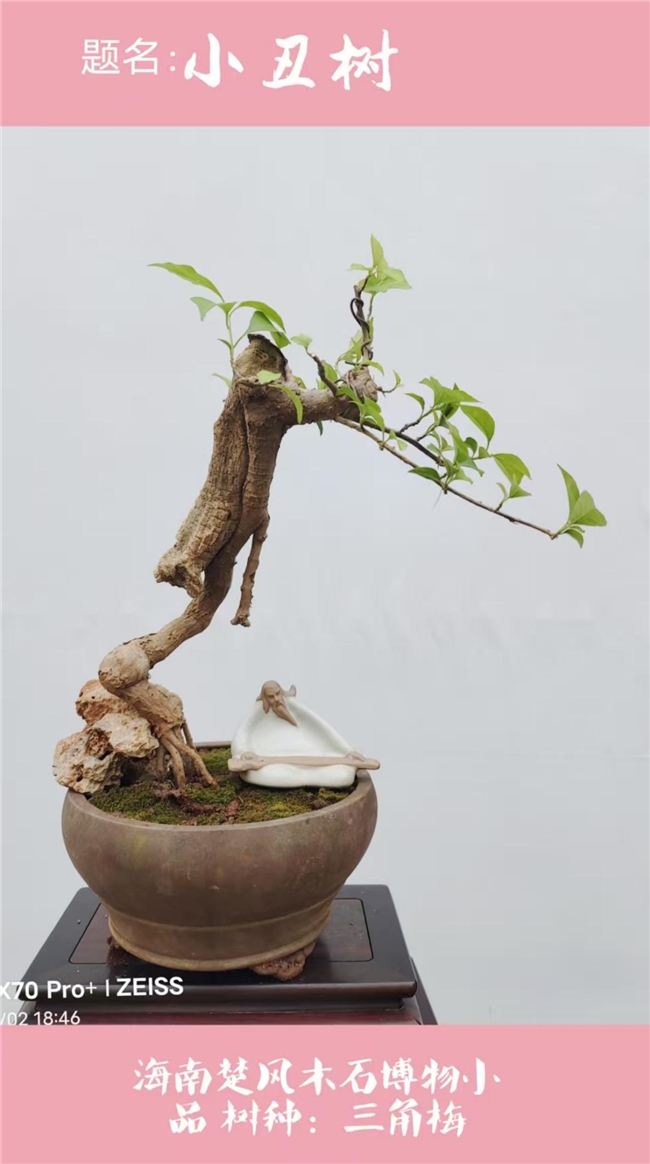
咏盆景小品
《小丑树》
胡庆魁
修剪崩落半块皮,
皮中生出一根须。
以丑为美盆景亊,
休与审美砖家提!
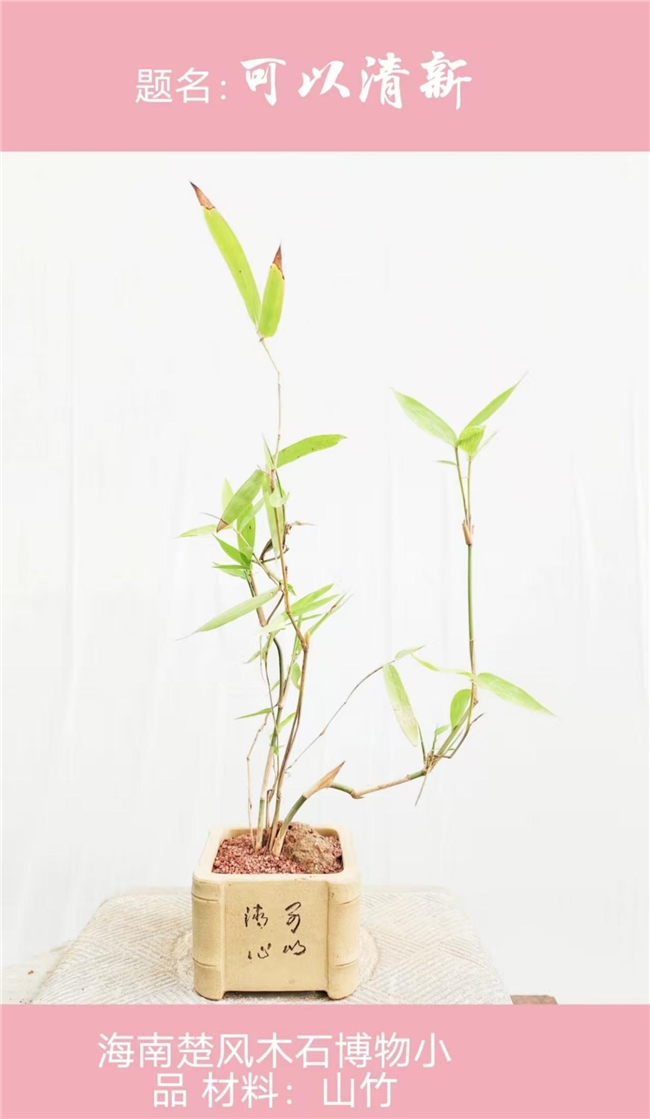
咏盆景
《可以清新》
胡庆魁
园右荒地掘一小竹,今天上盆。盆为宜兴紫砂,上镌“可以清心”四字,于是见盆起意,改一字,题名《可以清新》。
吾爱小竹小清新,
木石馆前停孤云。
欲把一盏茶共饮,
楚园人闲风也轻。
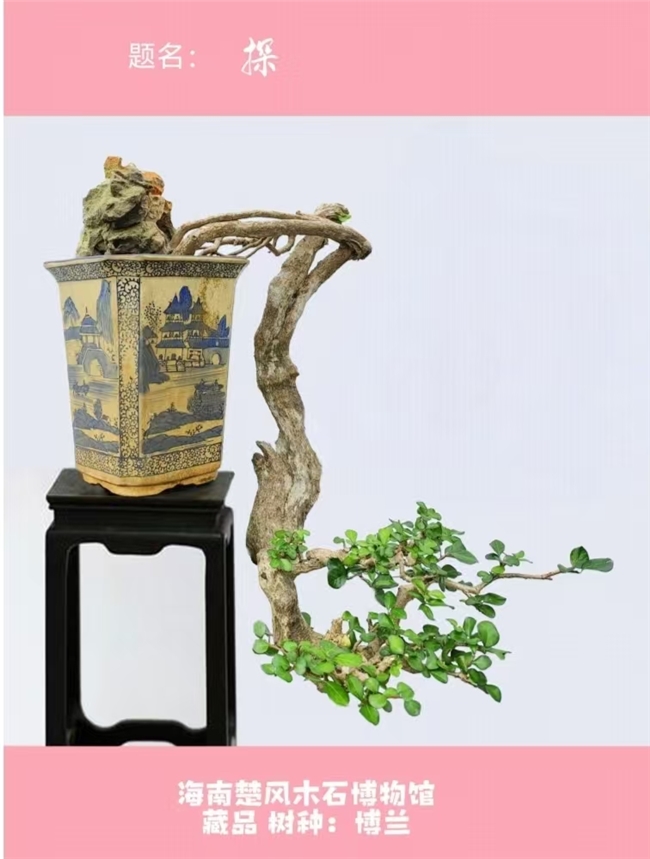
咏盆景《探》
胡庆魁
小树也有好奇心,
探幽揽胜不输人。
崖壁垂下何惧险?
涧水深流静无声。
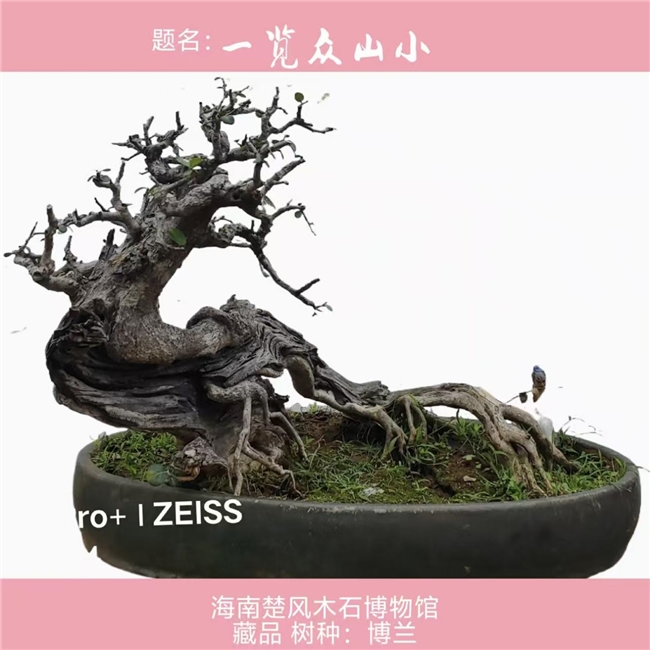
咏盆景
《一览众山小》
胡庆魁
历尽坎坷登高处,
一览众山寰宇清。
回首多少风流亊,
且听伯牙竹笛声。
注:盆面配件为伯牙吹笛。伯牙,古代著名音乐家,笛子技艺出众,被誉为“人间绝响”。
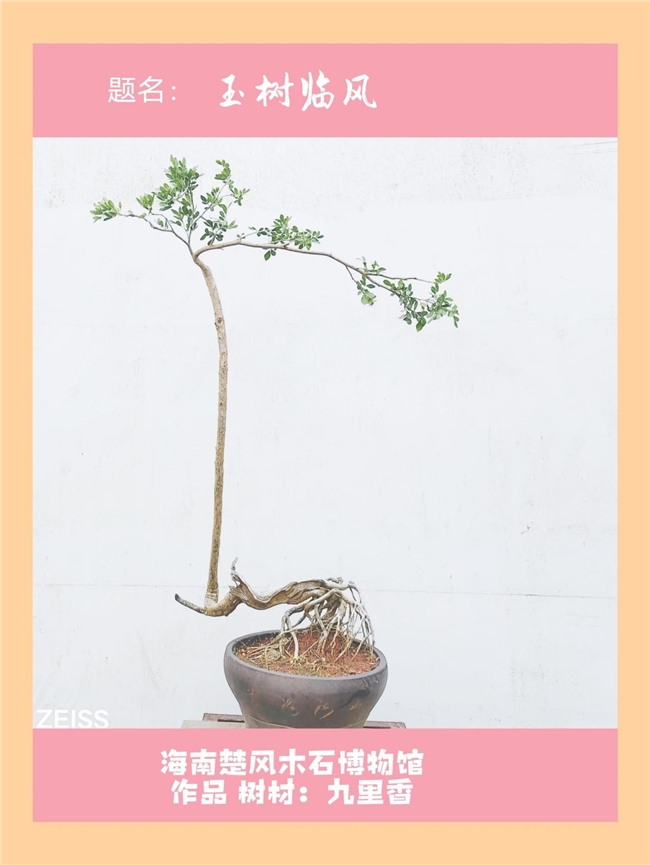
咏盆景
《玉树临风》
胡庆魁
半片枯木生一干,
玉树临风两三枝。
待到花开香九里,
碧螺茶洇打油诗。
注:香九里。此作树材为九里香,岭南盆景七大材料之一。花开时节,香飘九里。
碧螺,即碧螺春,中国名茶。老汉杯中之物。
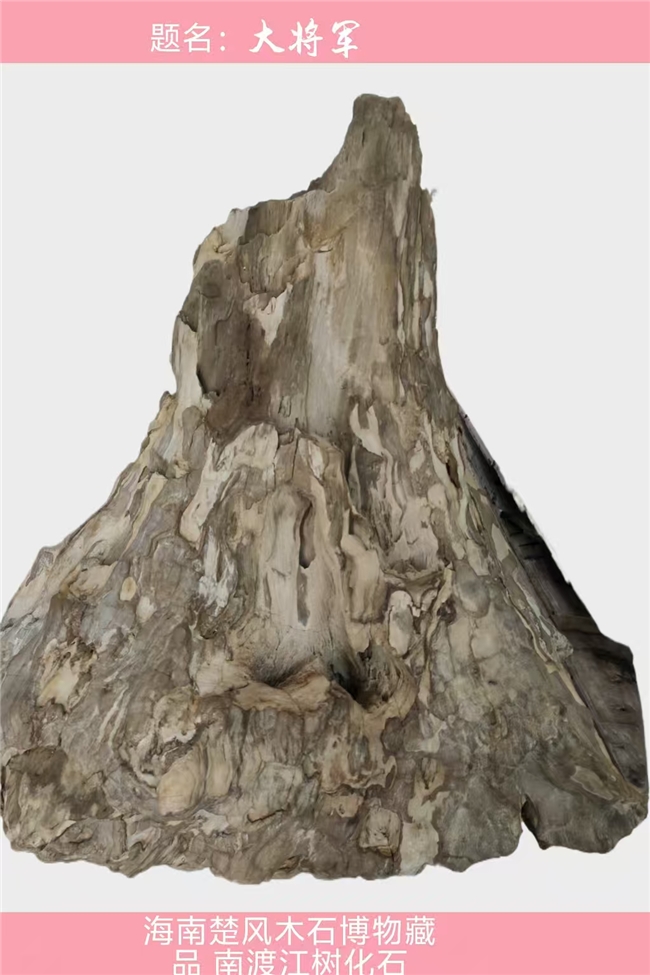
咏南渡江树化石
《大将军》
胡庆魁
黄沙百战穿未透,
一袭战袍硝烟留。
此身报国死何惜?
祁连昆仑享千秋!
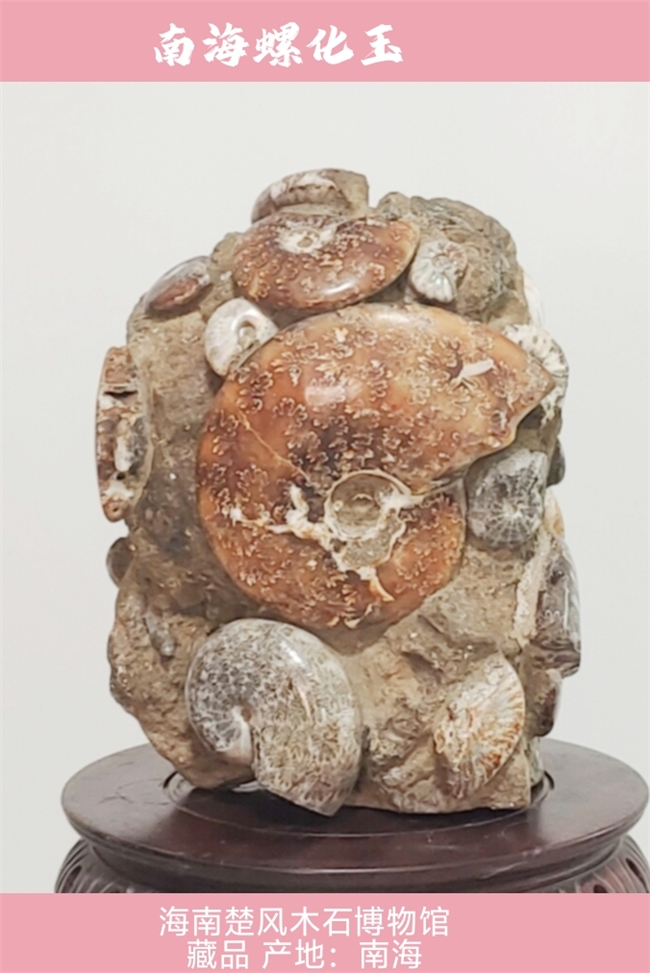
咏南海螺化玉
胡庆魁
四亿年前寒武纪,
浑沌初开藏淤泥。
螺蚌有心观盛世,
楚馆藏珍语不虚!
注:楚馆藏南海螺化玉,形成于四亿多年前的寒武纪、泥盆纪,螺成为化石的机率——十万分之一!
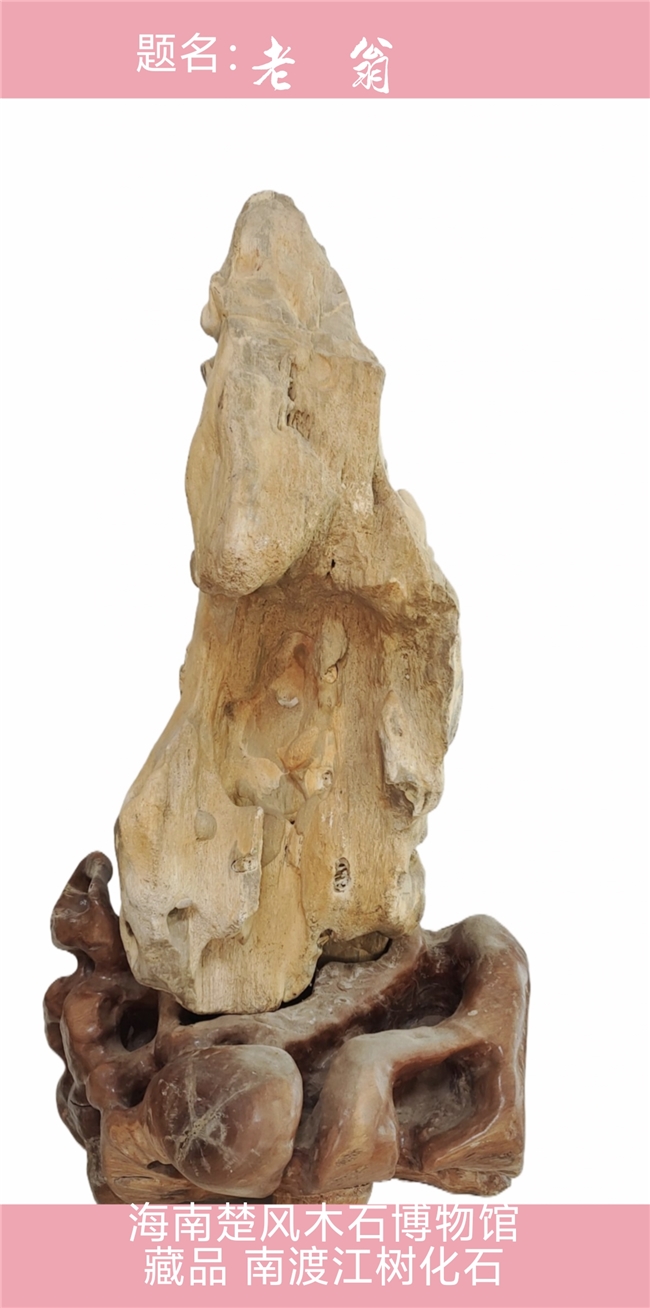
咏南渡江
树化石《老翁》
胡庆魁
亿年岁月任穿越,
恐龙银杏与苏铁。
一觉醒来驻楚馆,
孩童见面称老爷。
注:亿年句。据地质学家研究,南渡江树化石,在地下沉埋过亿年。
恐龙句,恐龙银杏与苏铁,侏罗纪时的动植物。
老爷,这里用老爷原意,即老爷爷,不是做官当老爷的“老爷”。
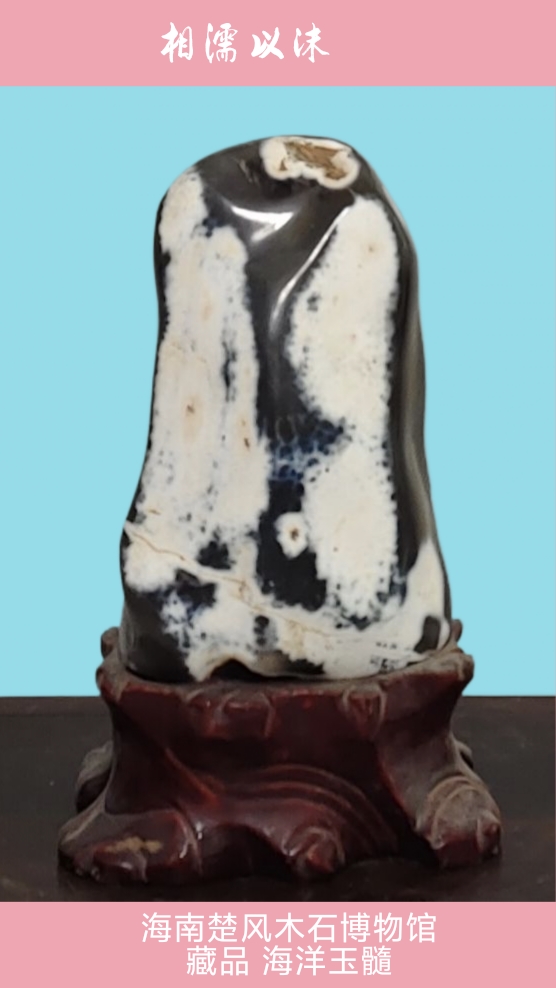
咏海洋玉髓
《相濡以沫》
胡庆魁
青梅竹马来携手,
地老天荒惜投缘。
岁月如流指间过,
相濡以沫又经年。
|

 Home > News >